For three centuries, Ferrara was ruled by the Este family, and under them it became one of the most refined courts in Renaissance Italy. Painters, poets, musicians and architects worked for the dukes, and the city itself was redesigned in the late fifteenth century with a great planned extension to the north. Ferrara's Renaissance centre, together with the Po delta, is now a UNESCO World Heritage Site, and it is still a city of wide streets, red brick and bicycles.
Numbers 30 and 31 on this list are two of the Este palaces, at opposite ends of the old town. Palazzo dei Diamanti is famous for its outside, Palazzo Schifanoia for one room inside.
The Castello Estense between them
Start in the middle of the city, at the Castello Estense, the moated brick castle that was the Este family's fortress and residence. With its four towers and its drawbridges over the green water of the moat, it is the symbol of Ferrara. Inside, visitors can see the ducal apartments, a chapel, painted ceilings and the dungeons where members of the family were once imprisoned after a failed plot. From the castle, the main streets lead north to Diamanti and south-east to Schifanoia.
Palazzo dei Diamanti
Palazzo dei Diamanti stands at the crossroads of the two main streets of the Renaissance extension of the city, the Addizione Erculea, laid out for Duke Ercole d'Este by the architect Biagio Rossetti at the end of the fifteenth century. Its name comes from its facade: thousands of blocks of white and pink marble, each carved into a pointed diamond shape. Seen from an angle, the facets catch the light differently and the whole wall seems to shimmer. The corner of the palace, facing the crossroads, has a carved pilaster and balcony that turn it into a monument for the whole intersection.
Inside, the palace houses an exhibition centre and the city's national picture gallery, with paintings by the artists of the Ferrara school, who developed a strange, intense style at the Este court. Exhibitions change the opening arrangements; check before you go.
Palazzo Schifanoia
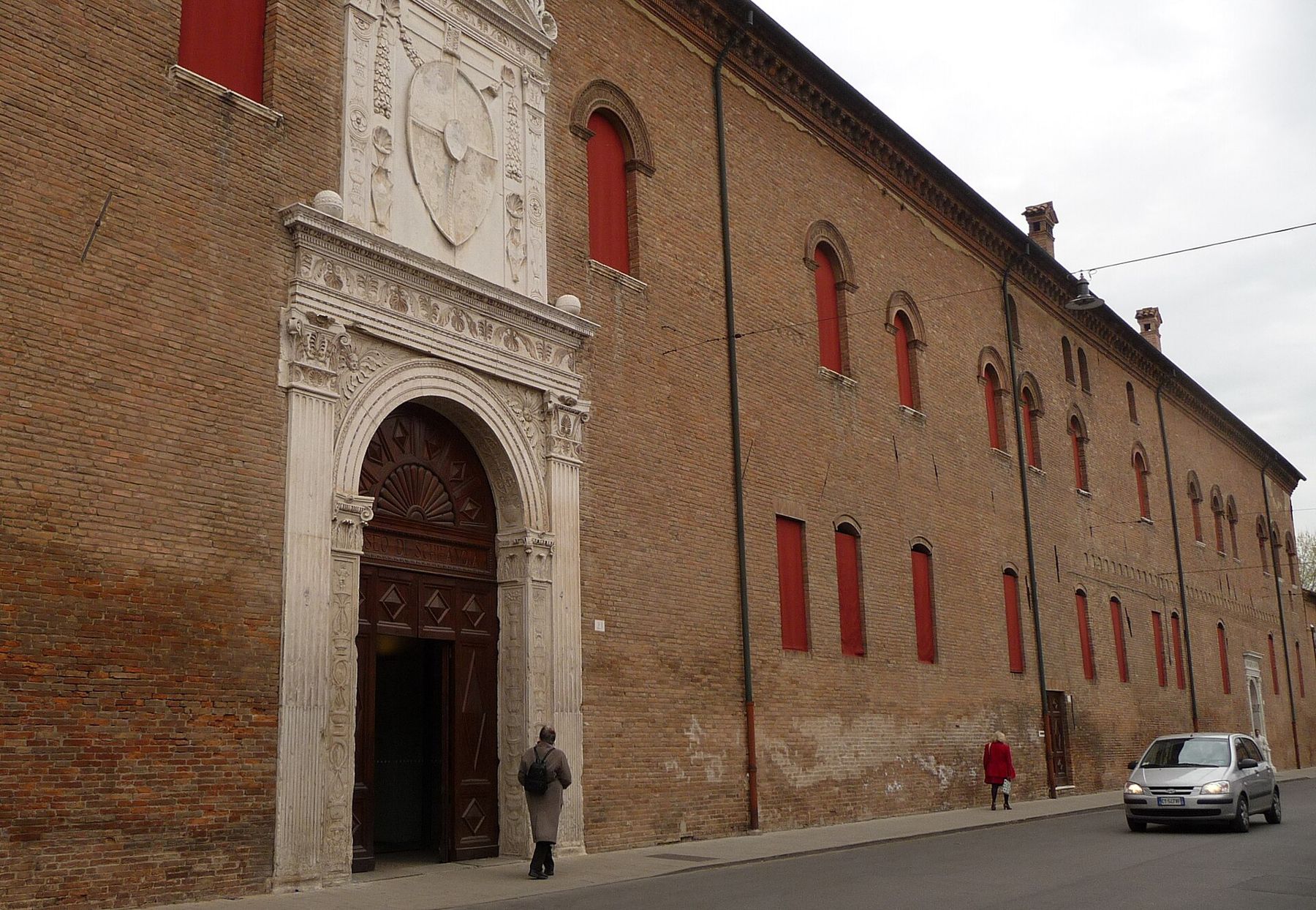
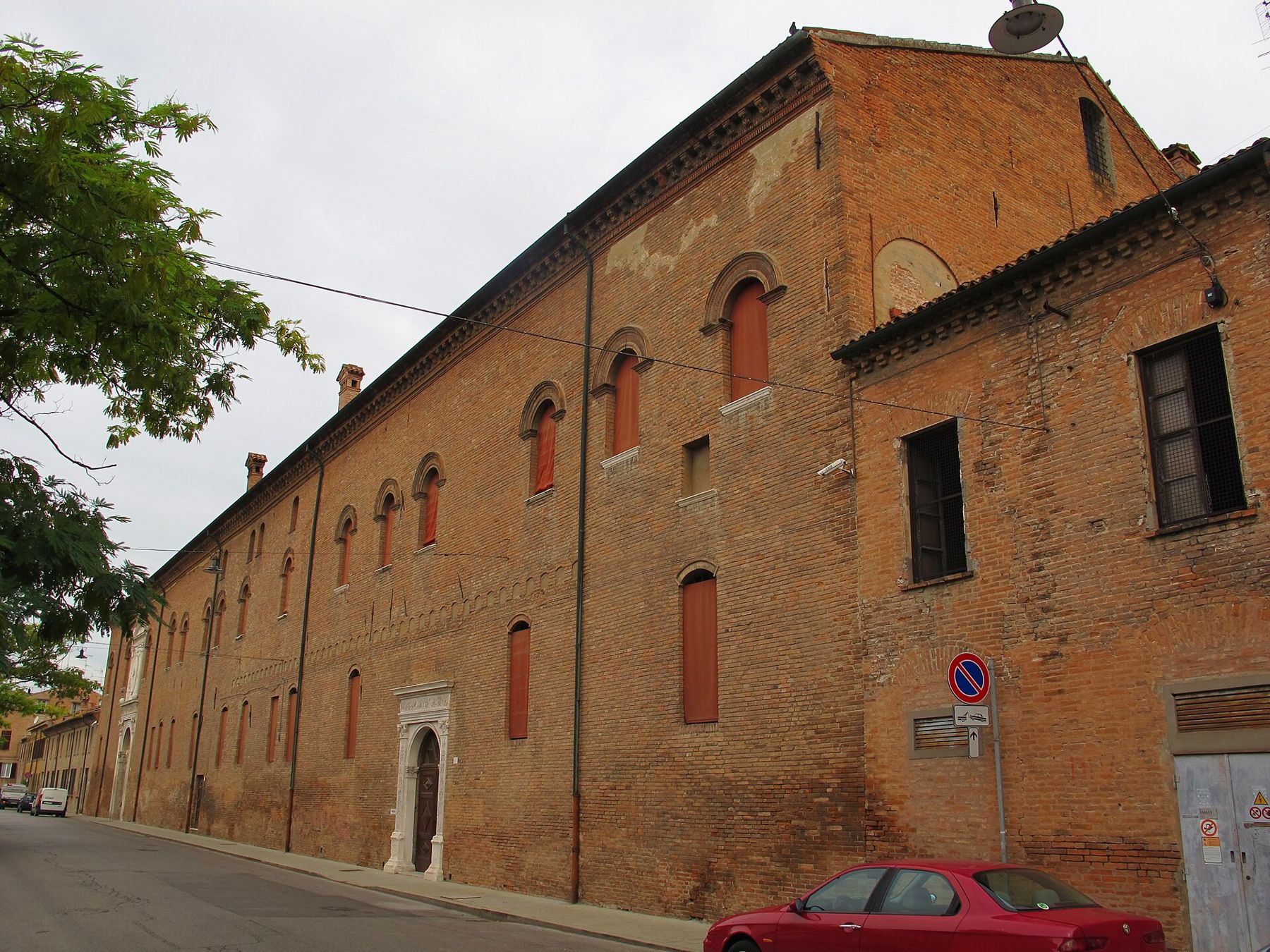
On the south-eastern side of the old town stands Palazzo Schifanoia, a palace of pleasure built by the Este in the fourteenth century and enlarged in the fifteenth. Its name means roughly escaping boredom, and it was a place for parties, music and entertainments away from the business of the court. From outside it is a long, plain brick building with a fine carved marble doorway.
35Its treasure is the Salone dei Mesi, the Hall of the Months, decorated in the 1460s and 1470s for Duke Borso d'Este by Francesco del Cossa, Ercole de' Roberti and other painters of the Ferrara school. The walls were divided into twelve panels, one for each month of the year, and each panel into three bands. At the top, the gods of classical myth ride triumphal chariots. In the middle, the signs of the zodiac appear with mysterious figures drawn from astrological texts. At the bottom, scenes of daily life at the court show the duke hunting, administering justice and giving gifts, while peasants work in the fields.
Reading the months
Only some of the months survive in good condition; others are faded or lost. The best preserved panels, on one long wall, show spring and early summer: March, April and May, with courtiers, horses, lovers and workers. Look at the details: hunting dogs, ladies in brocade, rabbits, falcons, and Borso himself appearing again and again, smiling and generous. The room offers a view of court life, the farming year and the astrology that shaped decisions in fifteenth-century Italy, all at once.
Visitors can only stand in the hall for a limited time, and numbers are controlled. Arrive early and give yourself time to look closely.
The Este and their court
The Este were among the oldest ruling families in Italy, and Ferrara was their capital from the thirteenth century until 1598, when the main line died out and the city passed to the Papal States. Under Borso, Ercole and Alfonso, the court was a centre of poetry, music and painting. Ludovico Ariosto wrote his epic poem Orlando Furioso for the Este, and painters such as Cosmè Tura and Dosso Dossi worked here. Lucrezia Borgia, married to Alfonso, spent the last part of her life at the court and is buried in the city.
After the Este left for Modena, Ferrara declined, and the city slowed down for centuries. That decline is part of the reason why so much of its Renaissance fabric survives, and why its streets feel so spacious today.
A city for cycling
Ferrara is flat, compact and full of bicycles, and cycling is the best way to get between the palaces and around the city. The medieval walls, which still encircle the city for about nine kilometres, have a path along their top, shaded by trees. A ride or walk along the walls makes a fine afternoon after the palaces, with views over gardens, orchards and the red roofs of the city.
Hours, tickets, the right day
Ferrara is easy to reach by train from Bologna, about half an hour away, and from Venice. Allow half a day for the two palaces and the castle. From Ferrara, the list continues west through Emilia to the Pilotta in Parma, and south to Urbino. Opening hours, exhibitions and prices change, so check them for Ferrara before you go.