The Gonzaga family seized power in Mantua in 1328 and ruled the city until the early eighteenth century. Over those four centuries, their palace grew from a medieval fortress into a vast complex of buildings, courtyards, gardens and galleries, said to hold hundreds of rooms. Each generation added a wing, an apartment or a garden, commissioning the best artists of their time. The palace occupies a whole corner of the old city, between the main square and the lakeside.
Palazzo Ducale is number 16 on this list. It is not a palace to see in a hurry: the route through it is long, and its greatest treasure is in a tower at the far end.
The approach from Piazza Sordello
The entrance is on Piazza Sordello, a long cobbled square lined on one side by the medieval wing of the palace, with its battlements and arcades, and closed at the end by the cathedral. The square was the heart of the Gonzaga city, and its scale shows the power of the family that built it. The older parts of the palace, facing the square, date from before the Gonzaga, and they look more like a fortress than a residence.
From here, the visit leads through the old medieval rooms into the later apartments, across courtyards and through galleries towards the castle on the lakeside.
Pisanello and the medieval rooms
In one of the early rooms, the remains of a great fresco painted by Pisanello in the fifteenth century show scenes of chivalry: knights in battle, tournaments and courtly life. The painting was hidden under later decoration and rediscovered in the twentieth century, along with the underlying drawings that show the artist's work in progress. It is fragmentary but fascinating, a glimpse of the court culture of the late Middle Ages.
The medieval rooms lead into apartments decorated in later centuries, with painted ceilings, tapestries and fireplaces. Several rooms are named for the paintings or decoration they once held, and some are now galleries for the collections.
The apartments of later Gonzaga
As the visit continues, the rooms become grander and more elaborate. The apartments created in the sixteenth century for the later dukes have ceilings painted with mythological scenes, gilded stucco, and rooms for collections of art and curiosities. The Gonzaga were among the greatest collectors of their age, though much of their collection was sold to the King of England in the early seventeenth century and later scattered.
Look out for the gallery with mirrors, the rooms decorated with maps and the rooms of the dukes' wives. Between the wings are gardens and courtyards, including a hanging garden built on the roof of one of the wings and a long courtyard used for tournaments and horse shows.
It is not a palace to see in a hurry: the route through it is long, and its greatest treasure is in a tower at the far end.
The Camera degli Sposi
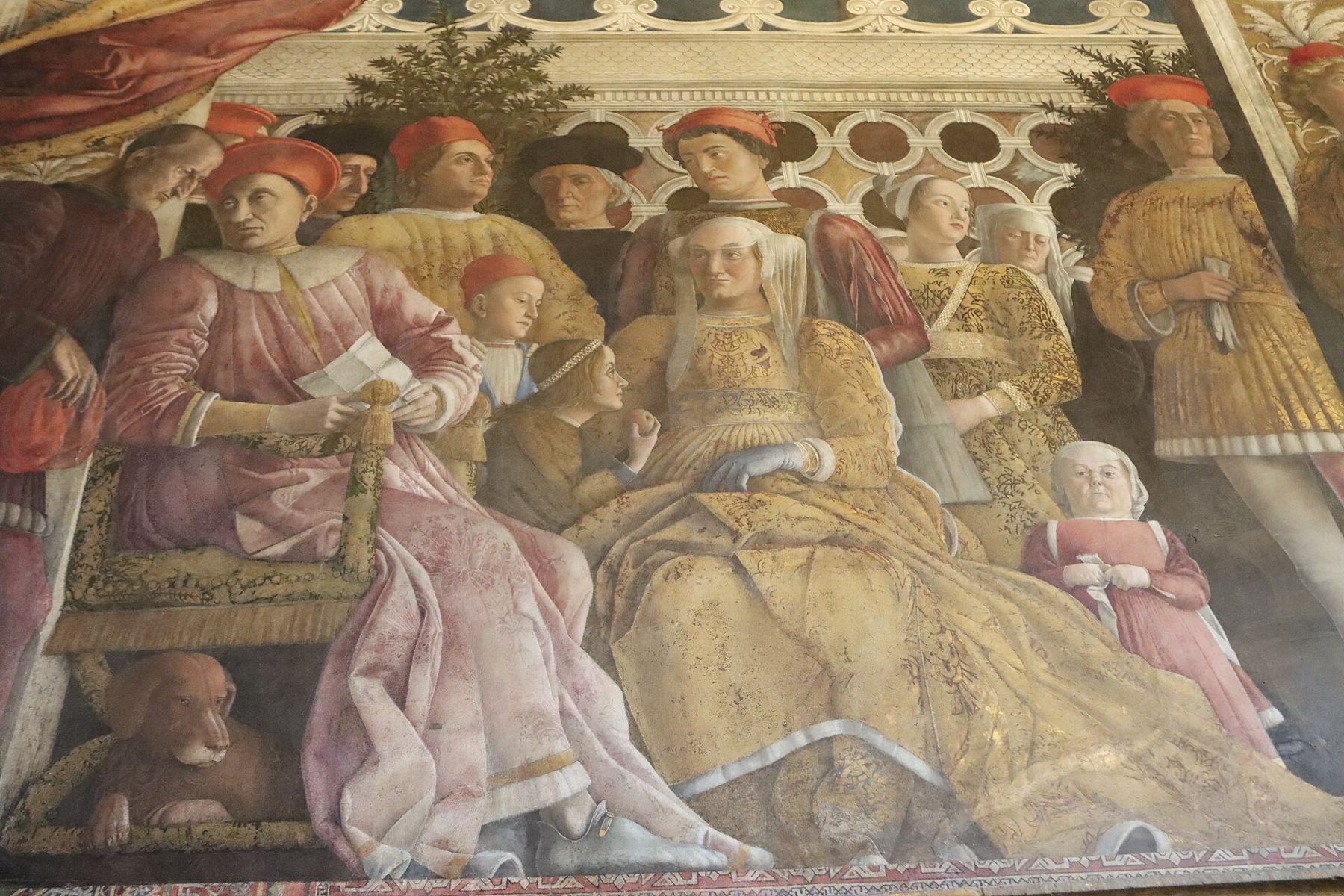
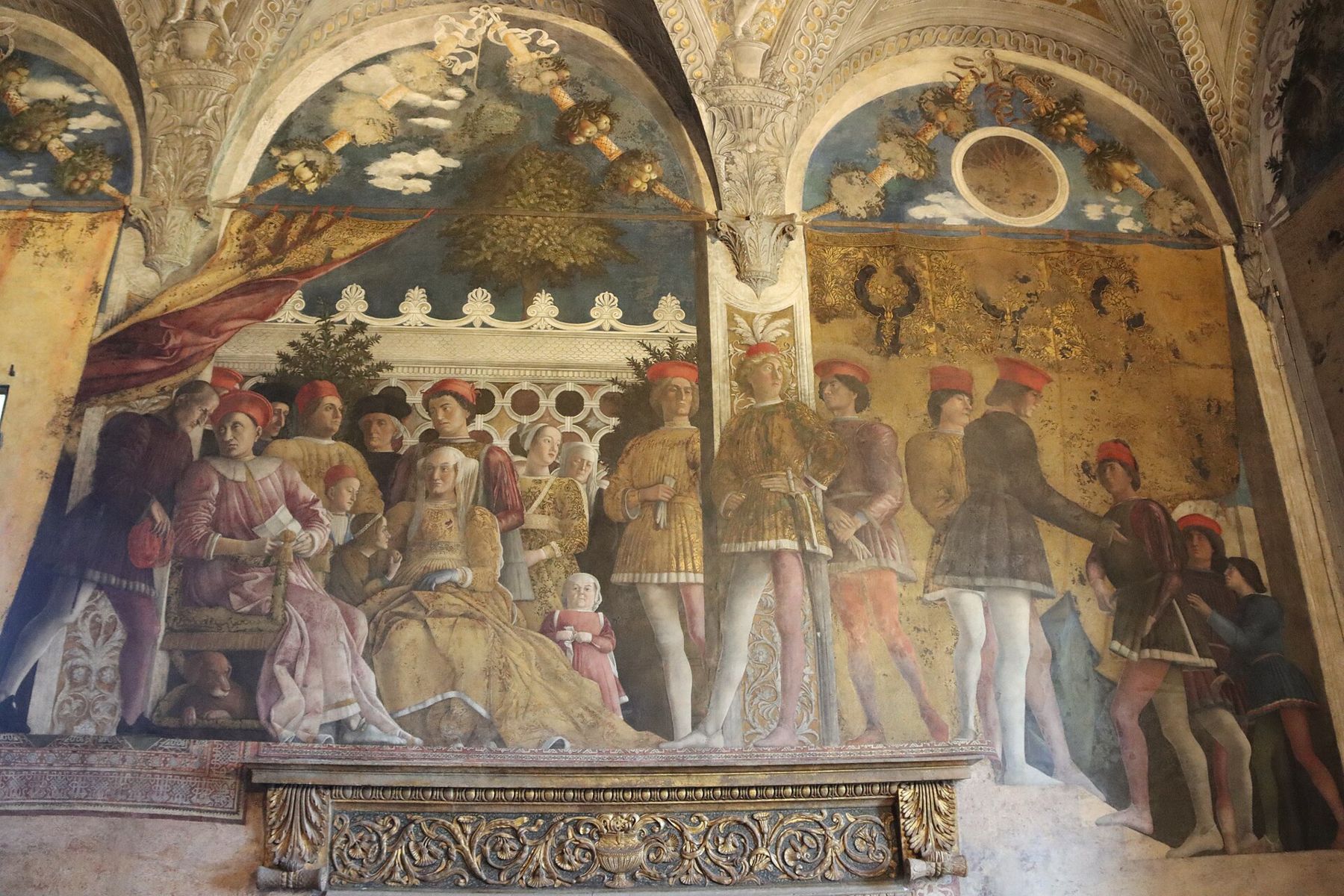
17At the far end of the complex stands the Castello di San Giorgio, a square, moated castle with towers at its corners, built in the late fourteenth century. In one of its towers, on the main floor, is the room the Gonzaga called the painted chamber, known today as the Camera degli Sposi, the bridal chamber. Between about 1465 and 1474, Andrea Mantegna painted its walls and ceiling for Ludovico Gonzaga and his wife Barbara of Brandenburg.
The walls show the Gonzaga court: the marquis, his family, courtiers, servants, dogs and horses, in scenes that seem to continue beyond the painted curtains and pilasters into the real room. The ceiling is the most famous part. In its centre, Mantegna painted an oculus, a round opening in the vault, through which you seem to see the sky. Around its edge, women and winged putti lean over the balustrade and look down at you, and a pot of plants balances precariously on the edge. It is one of the first examples in Western art of painted illusion seen from directly below.
Visits to the room are limited to small groups for a few minutes at a time, to protect the frescoes. Book your slot in advance, and arrive in good time.
A collection scattered across Europe
In the early seventeenth century, the last Gonzaga dukes of the main line, short of money, sold much of the family's collection of paintings and sculpture to the King of England. A few years later, in 1630, Mantua was sacked by imperial troops during a war over the succession to the duchy, and much of what remained was looted. The palace you walk through today is therefore a shell of what it was, its walls and ceilings intact but most of its movable treasures long gone.
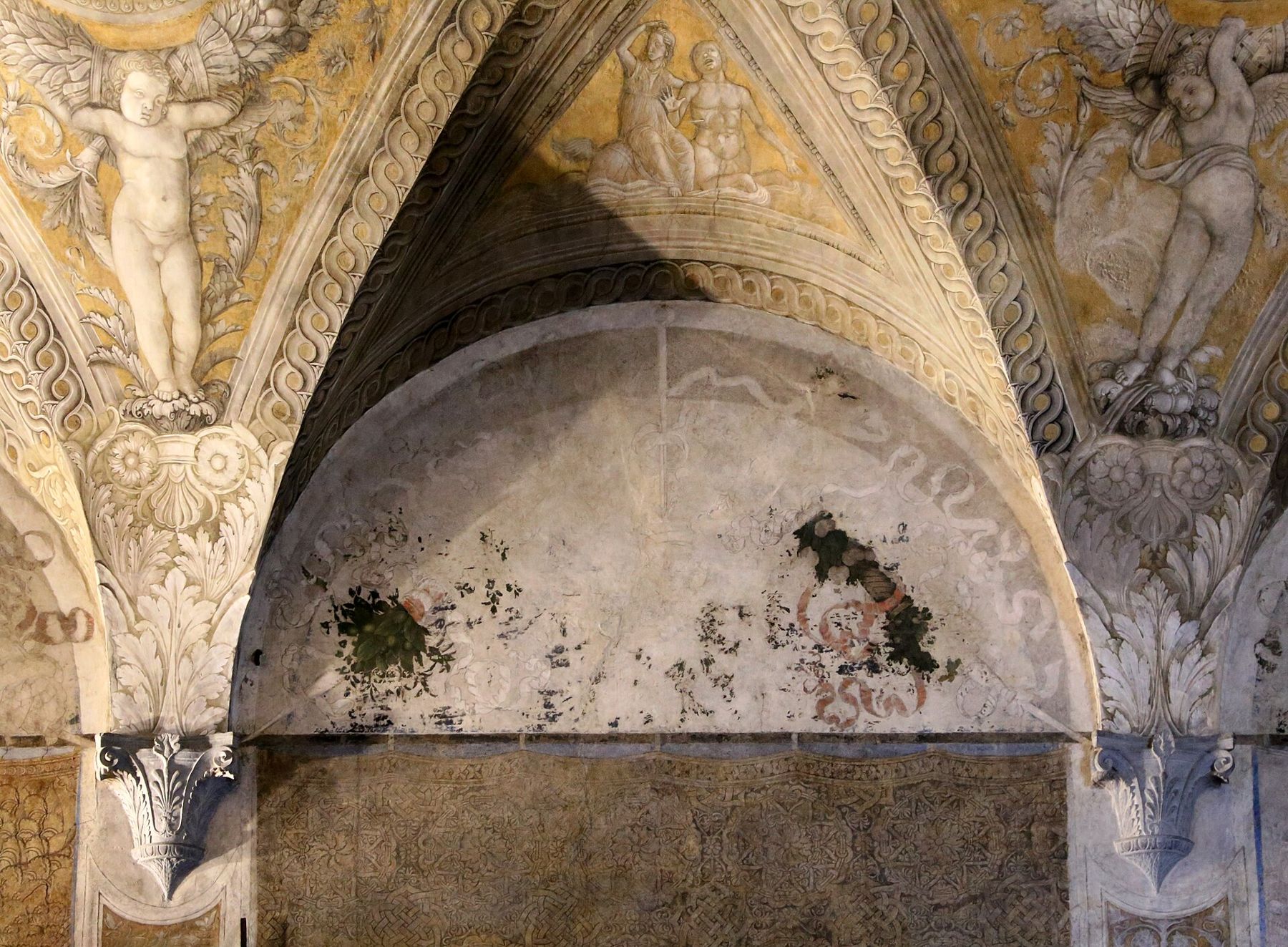
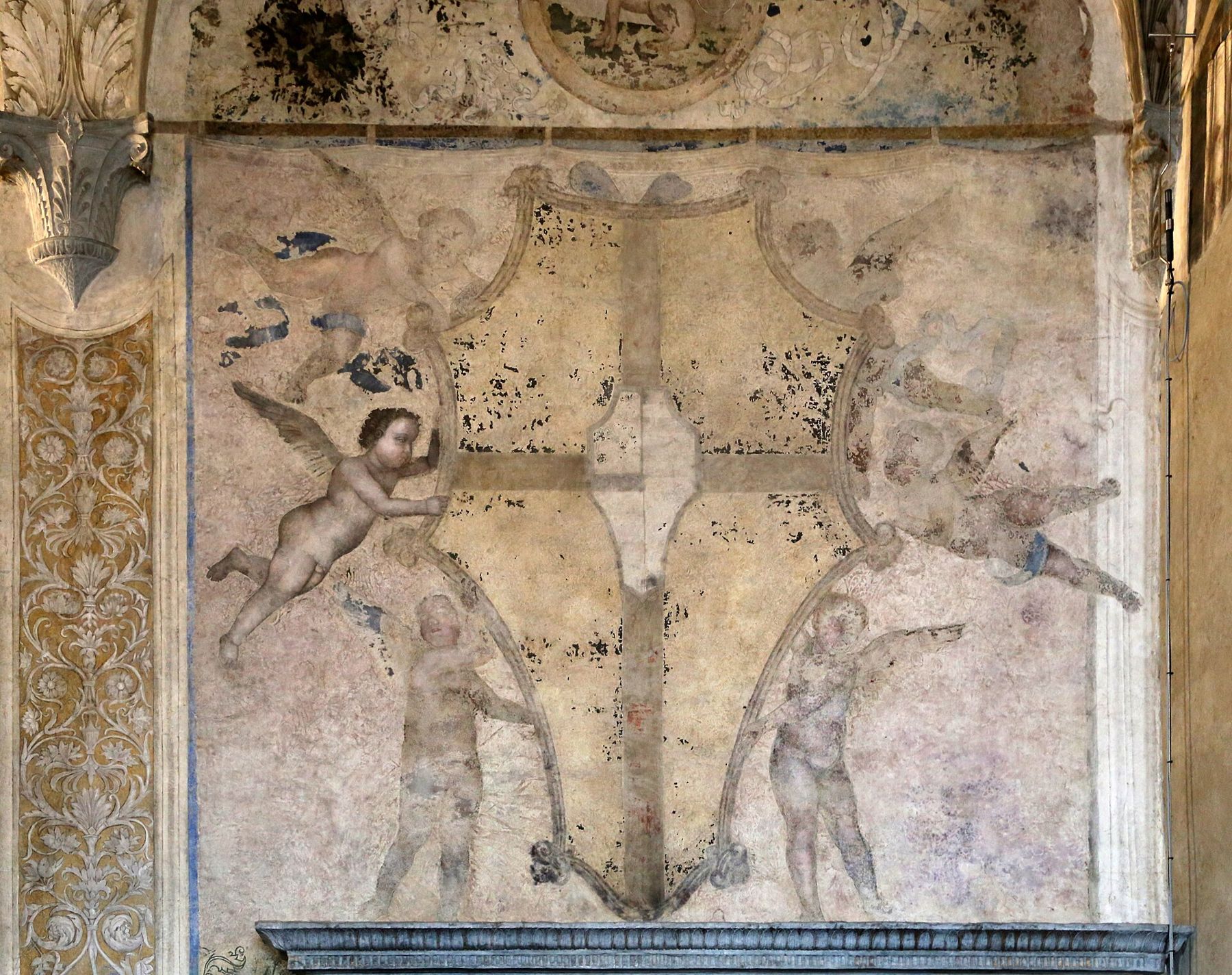
That loss makes the surviving painted rooms all the more precious. Frescoes could not be carried away, and the Camera degli Sposi, the Pisanello fragments and the painted ceilings of the later apartments remain where they were created. The museum has gathered paintings, tapestries and sculpture from other sources to fill some of the rooms, but the real collection of the palace is its walls.
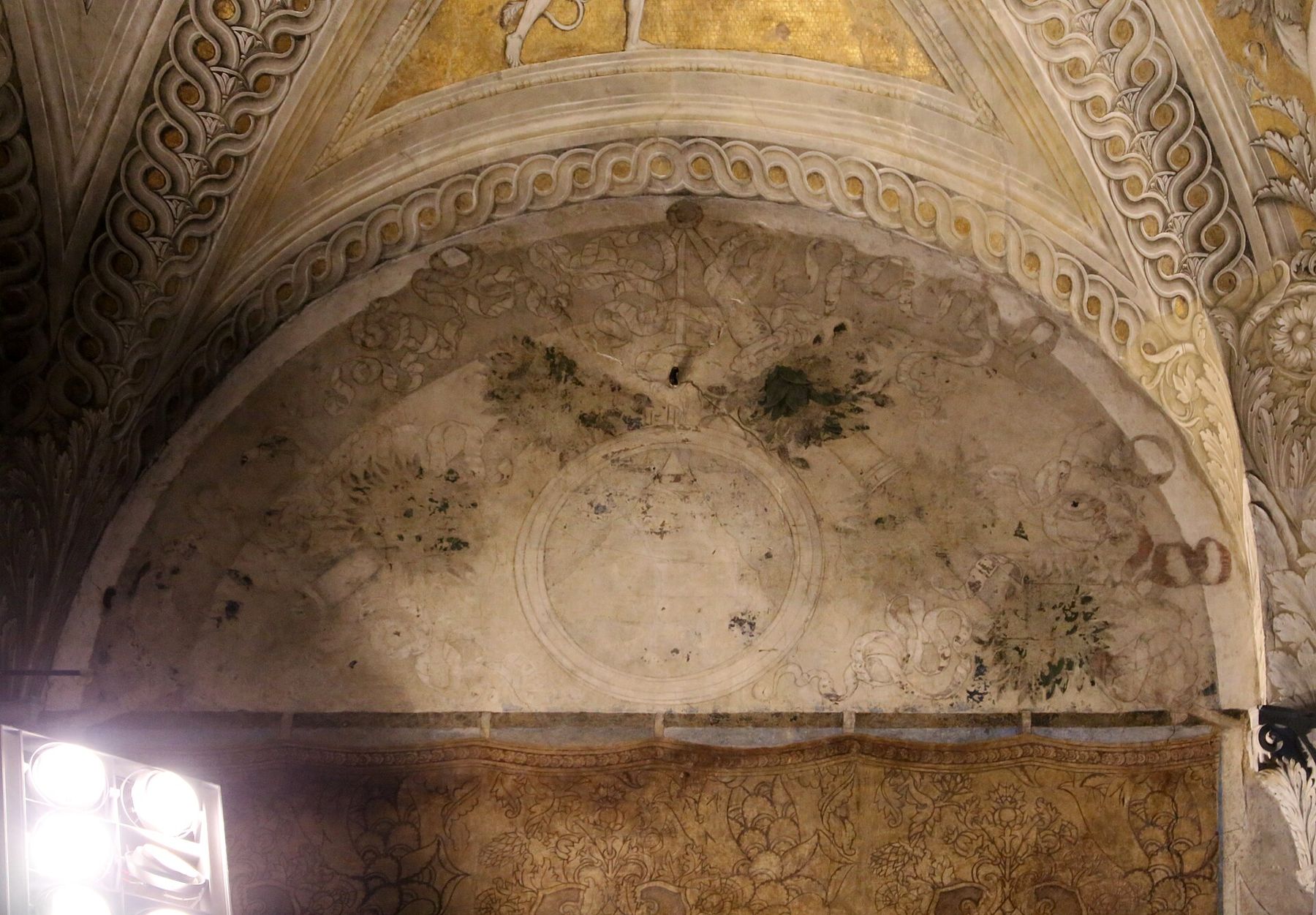
Inside the castle, the routes to the painted room pass through rooms with remains of other decoration and through the castle's courtyard, with its loggias and spiral ramp. Give yourself time here before your slot: the castle itself, with its moat and towers, is one of the best preserved of its kind in northern Italy.
Mantua around the palace
From the castle, paths lead to the lakeside, where the Mincio spreads into lakes around three sides of the city. The view back across the water to the palace and the castle towers is the classic image of Mantua, best from the bridge that crosses the lakes to the north-east of the centre in the early morning or at sunset. Boats run short trips on the lakes in season, and paths along the shore are popular with cyclists. In the old centre, the church of Sant'Andrea, designed by Leon Battista Alberti, the medieval squares and the arcaded streets are all a short walk away. The city and nearby Sabbioneta are a UNESCO World Heritage Site.
The visit pairs naturally with Palazzo Te, on the southern edge of the city, where the Gonzaga built their villa of pleasure a generation after Mantegna's room. The list then continues east to the doges of Venice. Opening hours, prices and access to the painted room change, so check them for Mantua before you go.