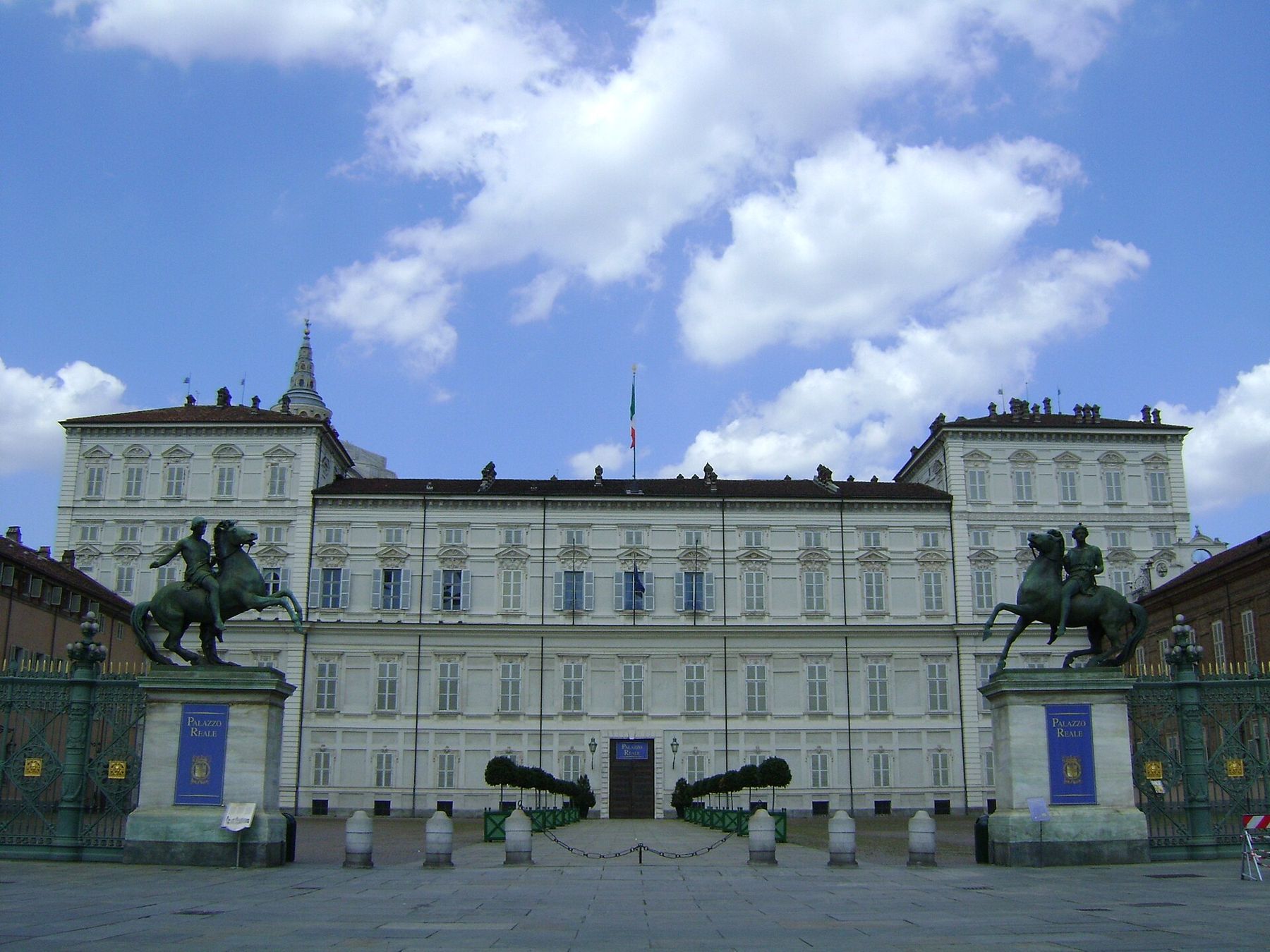
Turin was the capital of the House of Savoy, a dynasty that began as counts in the Alps and ended as kings of Italy. Its Royal Palace, on the north side of Piazza Castello, was their main residence from the seventeenth century until Italian unification moved the capital elsewhere. Behind its plain brick facade lie dozens of state rooms, a great armoury, a library, a picture gallery, a chapel and formal gardens, now joined together as the Musei Reali, the Royal Museums of Turin.
The palace is part of a group of Savoy residences in and around Turin listed together as a UNESCO World Heritage Site. It is number 07 on this list, and it takes most of a day to see well.
The approach
The palace faces Piazza Castello across an open courtyard closed by a railing with statues of the twin horsemen of classical myth. The facade is sober, even severe: the Savoy kept their splendour for the inside. Walking in, you pass through the courtyard to the ticket hall, and the circuit begins on the main floor.
The state apartments
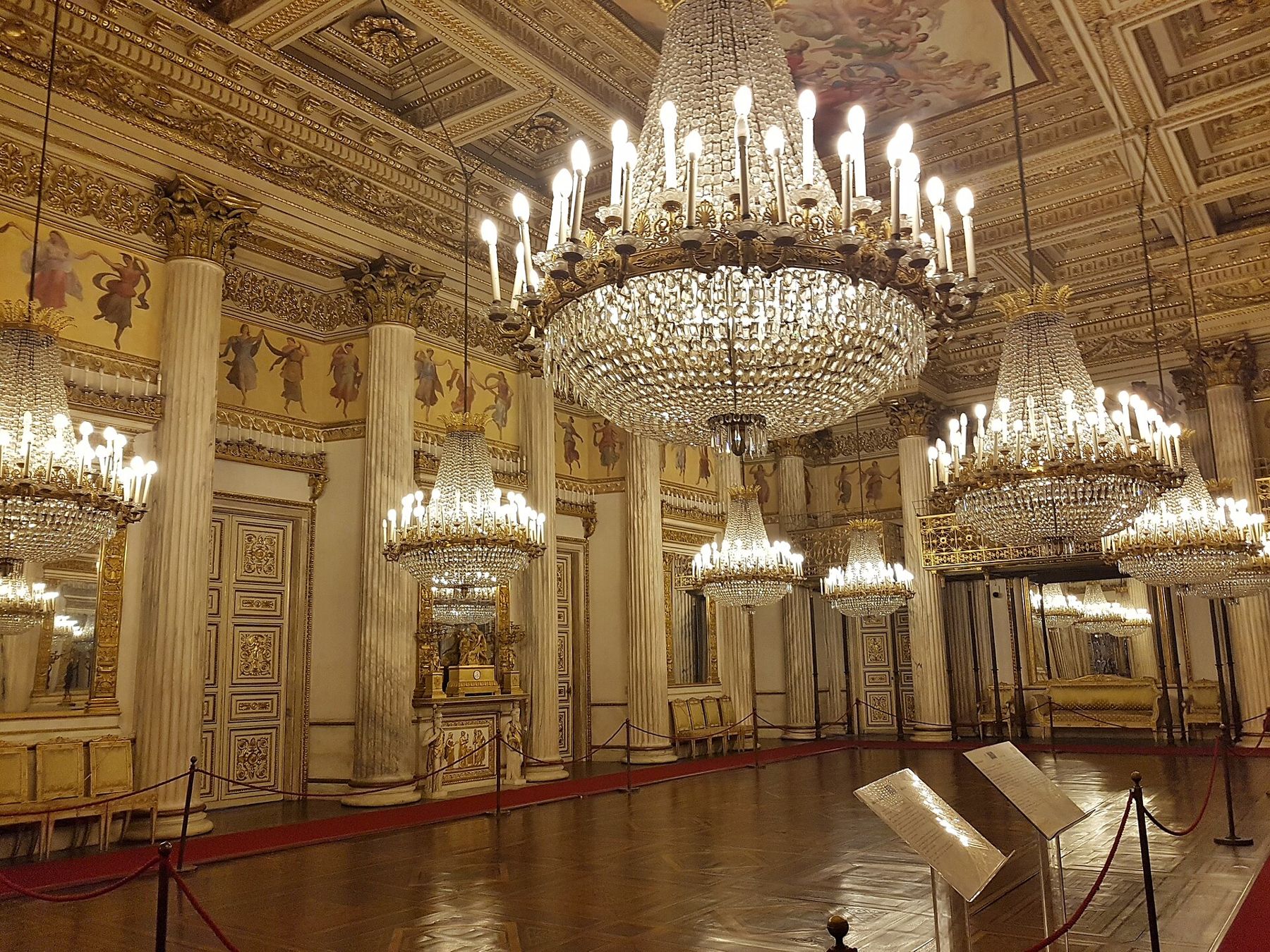
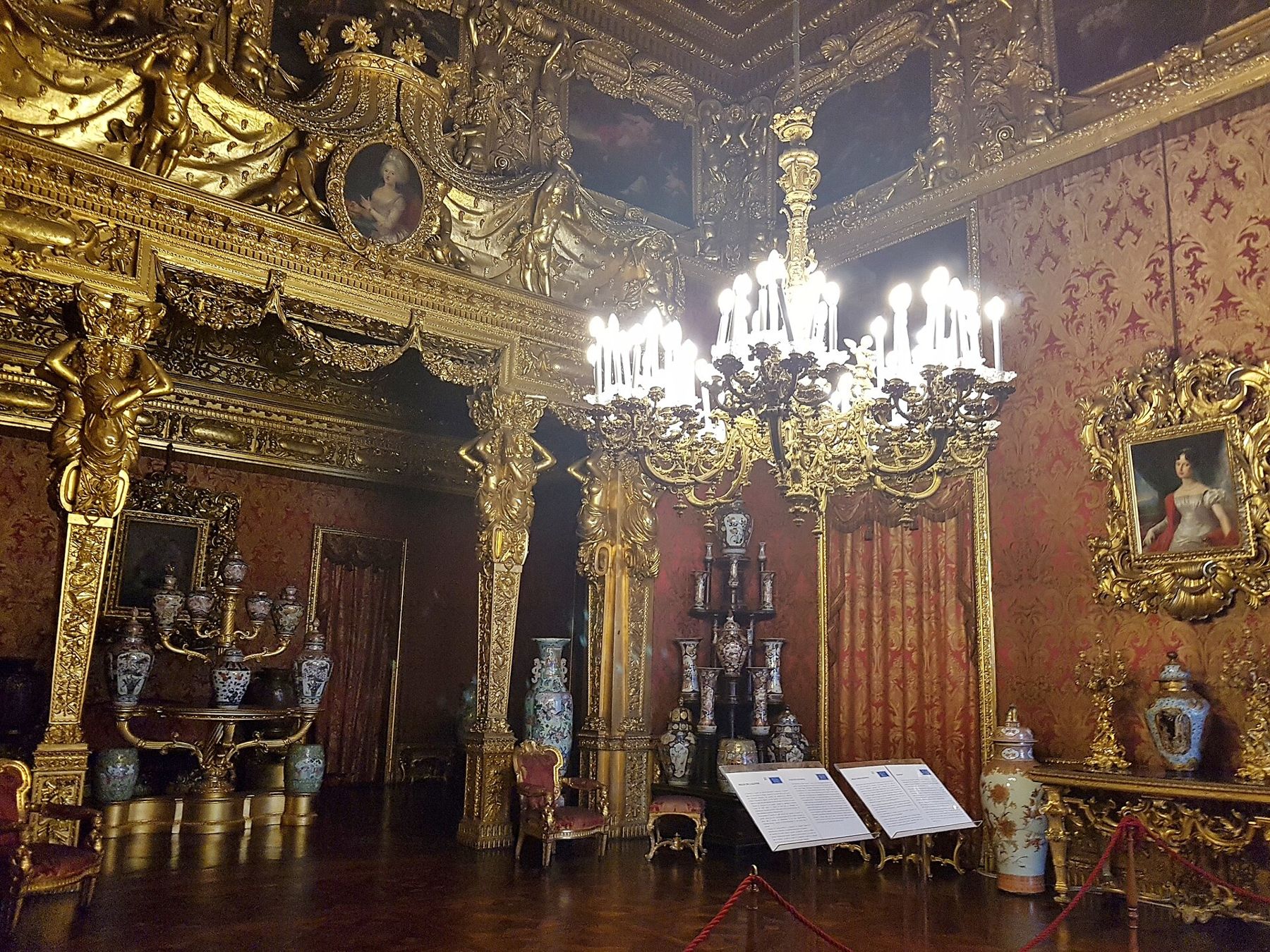
The royal apartments are a long sequence of rooms decorated from the seventeenth to the nineteenth century, with painted and gilded ceilings, silk walls, mirrors, chandeliers and furniture of every period. They include throne rooms, audience halls, a ballroom and private apartments of kings and queens. The decoration reflects changing tastes, from heavy baroque gilding to the lighter styles of the eighteenth century and the grand rooms of the nineteenth-century kings.
Look for the details: the inlaid wooden floors, many of them masterpieces of their kind, the Chinese lacquer room and the elaborate staircase designed in the eighteenth century by Filippo Juvarra, known as the scissors staircase for the way its flights cross.
The Royal Armoury
Off the apartments, the Royal Armoury fills a long gallery with suits of armour, swords, firearms and equipment collected by the Savoy over centuries. Mounted figures in full armour stand in rows down the centre of the room, and the walls are lined with cases of weapons. The gallery itself, with its painted vault, is as impressive as the collection. It is one of the most important armouries in Europe, and even visitors with no interest in weapons tend to find it memorable.
The library and the gallery
Below the armoury, the Royal Library holds books, manuscripts and drawings collected by the Savoy kings. Its treasures include a drawing often identified as a self-portrait of Leonardo da Vinci, shown only occasionally because of its fragility. The library's reading room, with its wooden shelves and painted ceiling, can be seen on the visit when it is open.
08The Galleria Sabauda, the picture gallery, occupies a modern wing of the complex, with Italian and European paintings collected by the Savoy, including works by Flemish and Dutch masters, Italian Renaissance painters and artists of the Piedmontese court.
The chapel and the gardens
From the palace, visitors can look into the Chapel of the Holy Shroud, a domed chapel designed in the seventeenth century by Guarino Guarini between the palace and the cathedral. Its extraordinary dome, made of stacked arches that seem to dissolve into light, was badly damaged by fire in 1997 and reopened after a long restoration. The relic itself is kept in the cathedral and shown only on rare occasions.
Behind the palace, the Royal Gardens offer a quiet break, with formal paths, fountains and trees, and views back to the palace facade.
The Savoy and the shape of Turin
The palace was the centre of a capital planned around it. From Piazza Castello, straight streets run out in a grid, many of them lined with arcades, and the Savoy built their churches, ministries, academies and theatre in the streets around the palace. The command zone, as historians call it, put the court, the government and the army within a few minutes of each other.
Around Turin, the dynasty built a ring of country residences and hunting lodges, from the vast palace at Venaria Reale to the hilltop basilica of Superga, where many of the Savoy are buried. Together with the city palaces, they form the UNESCO-listed group of royal residences. The Royal Palace was the hub of this system, and seeing it first makes sense of the rest.
When Italy was unified in 1861, Turin briefly became its first capital, before the court moved to Florence and then Rome. The palace remained a royal residence but lost its central role, and it was opened to the public in the twentieth century.
A café and a shop sit near the end of the circuit, and benches in the gardens offer a rest before or after. The ticket usually allows re-entry to some sections on the same day, which makes it easier to break the visit with a walk around Piazza Castello or lunch under the arcades nearby.
Hours, tickets, the right day
The circuit is long, with many rooms and a lot of walking, so allow half a day and take breaks. Arrive early, as some sections have limited opening hours. Combine the visit with Palazzo Madama across the square. From Turin, the list heads east across the Po plain to Mantua. Opening hours, prices and access to individual rooms change, so check them for Turin before you go.