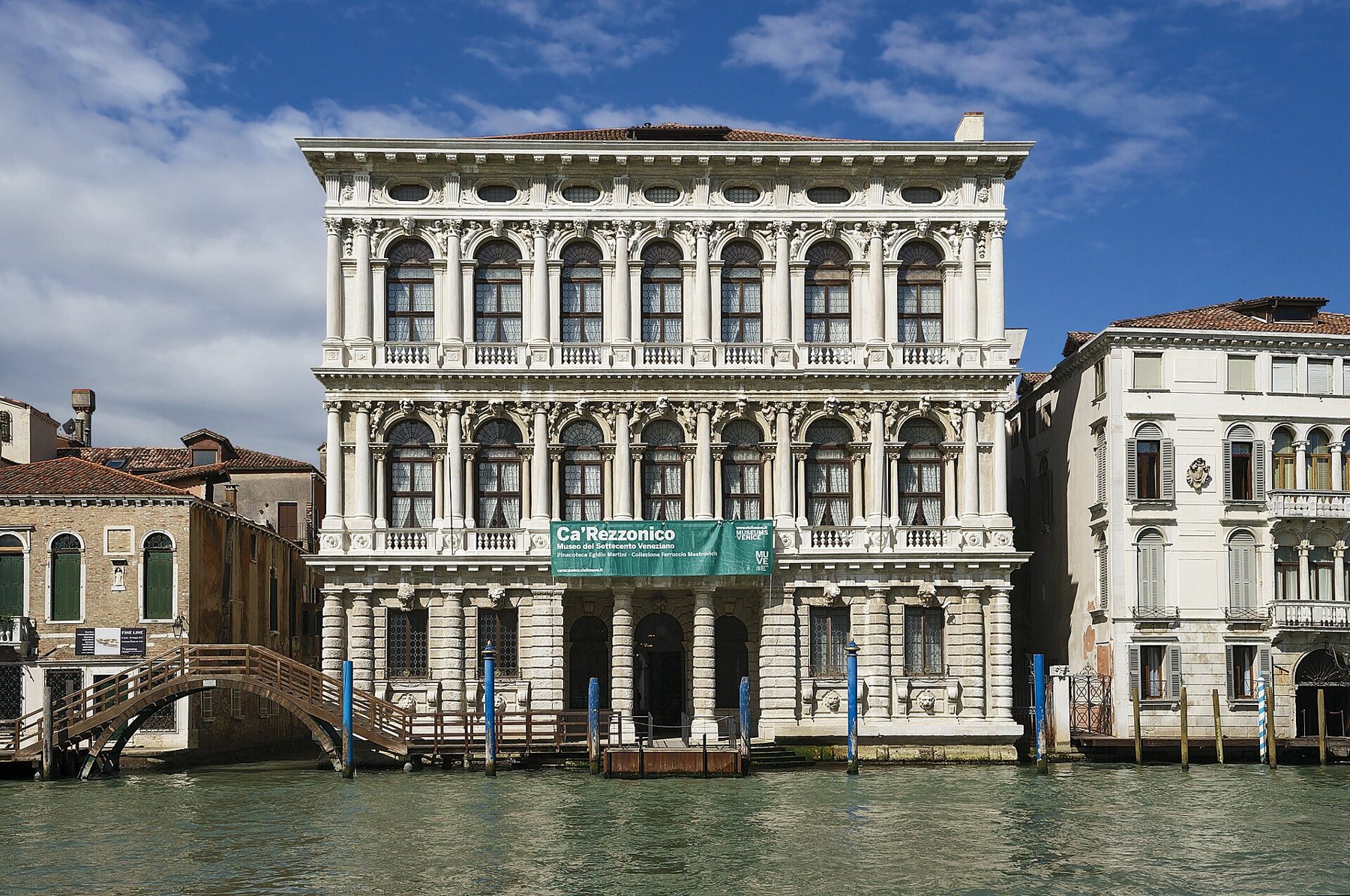
Ca' Rezzonico was begun in the mid-seventeenth century by a noble family who ran out of money. The unfinished building was bought in the eighteenth century by the Rezzonico, a wealthy merchant family who had recently bought their way into the Venetian nobility. They completed it in grand style, with a new top floor and a ballroom, and in 1758 a member of the family was elected pope. For a few decades the palace was the scene of lavish parties and receptions.
Today it houses the city's museum of eighteenth-century Venice, filled with paintings, frescoes, furniture and objects from the last century of the Venetian Republic. It is number 21 on this list. Of all the palaces you can enter on the Grand Canal, it gives the clearest idea of how a noble Venetian house was arranged: a water gate and storerooms at the bottom, the grand reception rooms on the main floor, and private apartments and servants' rooms above.
The facade and the arrival
The palace stands on the Grand Canal in the district of Dorsoduro, with its main facade facing the water. The lower floors were designed by Baldassare Longhena, the architect of the church of Santa Maria della Salute; the upper floor was completed by Giorgio Massari in the eighteenth century. The facade is heavily decorated with columns, arched windows and carved masks, and it is one of the grandest on the canal.
The best way to arrive is by water. The vaporetto stop named after the palace is directly in front of it, and from the boat you see the facade as the Venetians intended. The museum entrance is on the land side, through a quiet square behind the palace.
The ballroom and the staircase
A grand staircase, decorated with sculptures of cherubs, leads up to the main floor, the piano nobile. Here is the palace's greatest room, the ballroom, a huge space rising through two storeys, with walls and ceiling painted with illusionistic architecture so convincing that it is hard to tell where the painted columns end and the real ones begin. Gilded chandeliers hang from the ceiling, and carved and gilded furniture lines the walls.
The room was built for receptions and dances, and it is easy to imagine it filled with masked guests during the Carnival. Stand in the middle and look up: the ceiling opens onto a painted sky with gods and allegorical figures.
Tiepolo overhead
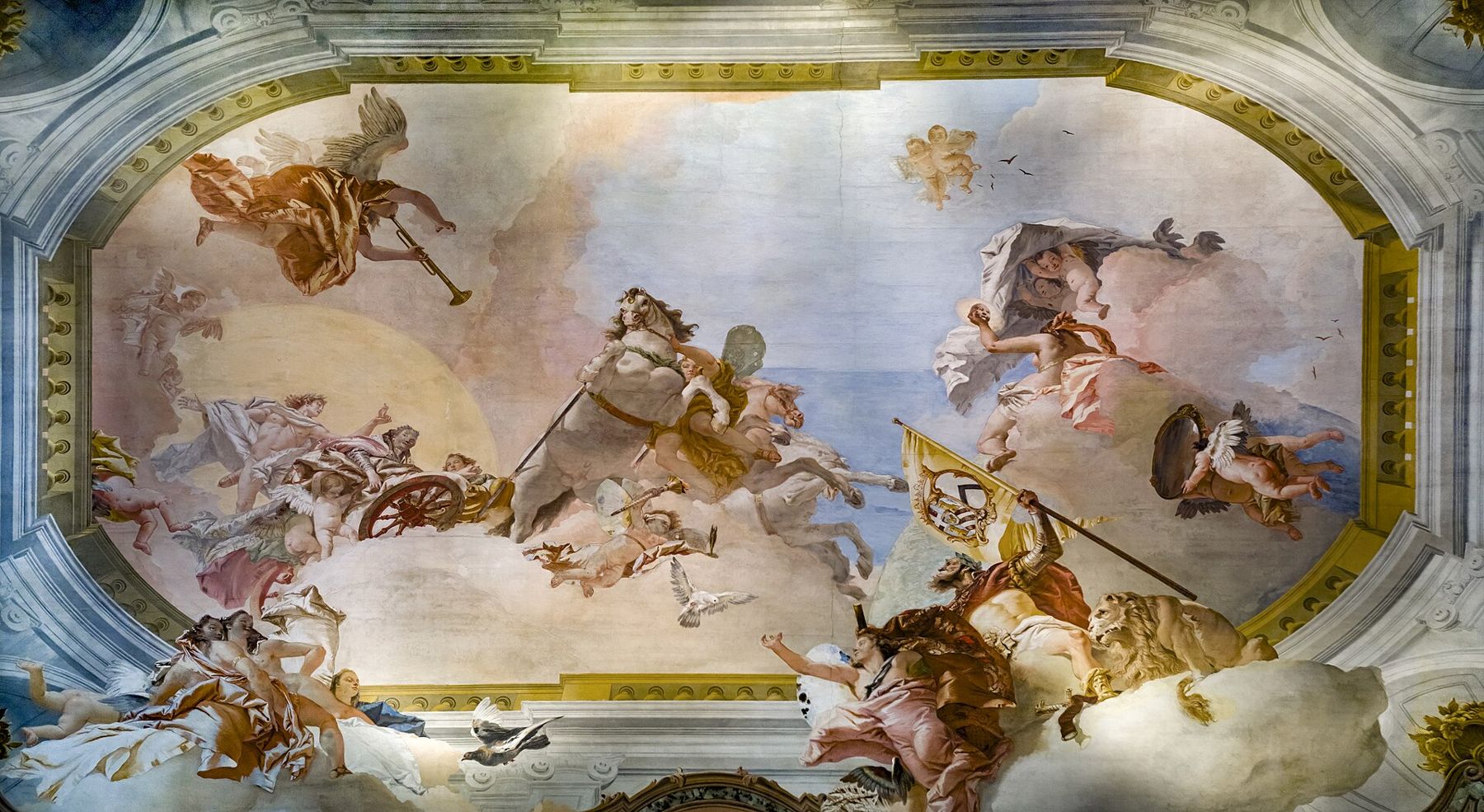
Several rooms on the main floor have ceilings painted by Giambattista Tiepolo, the greatest Venetian painter of the eighteenth century. One celebrates the marriage of members of the Rezzonico family, with figures floating through a sky of pale light, carried by horses and clouds. Tiepolo's ceilings are light, airy and full of movement, and they show the confidence and luxury of Venice in its final years of independence.
Other rooms hold ceilings by different painters, and some have been brought from other Venetian palaces to replace decoration that was lost. The museum has assembled its collection from many sources, and the result is a picture of eighteenth-century Venice rather than of a single family's home. The most intimate rooms are the small ones on the canal side, where the windows frame the boats on the Grand Canal and the palaces opposite, and where the light reflected off the water ripples across the painted ceilings on sunny mornings. Pause at the windows; the view is part of the collection.
Lacquer, glass and carved wood
The rooms are furnished with pieces from the period. Venetian lacquered furniture, painted in bright colours with Chinese-inspired scenes, was a speciality of the city, and the museum has some of the finest examples. In one room stands a set of furniture carved by Andrea Brustolon, with chairs and tables held up by carved figures of slaves and river gods, a startling display of skill. Murano glass chandeliers, mirrors and porcelain complete the picture.
Look at the details: the silk and damask on the walls, the stucco, the inlaid floors. The palace was meant to impress, and every surface was decorated.
Longhi and the everyday Venice
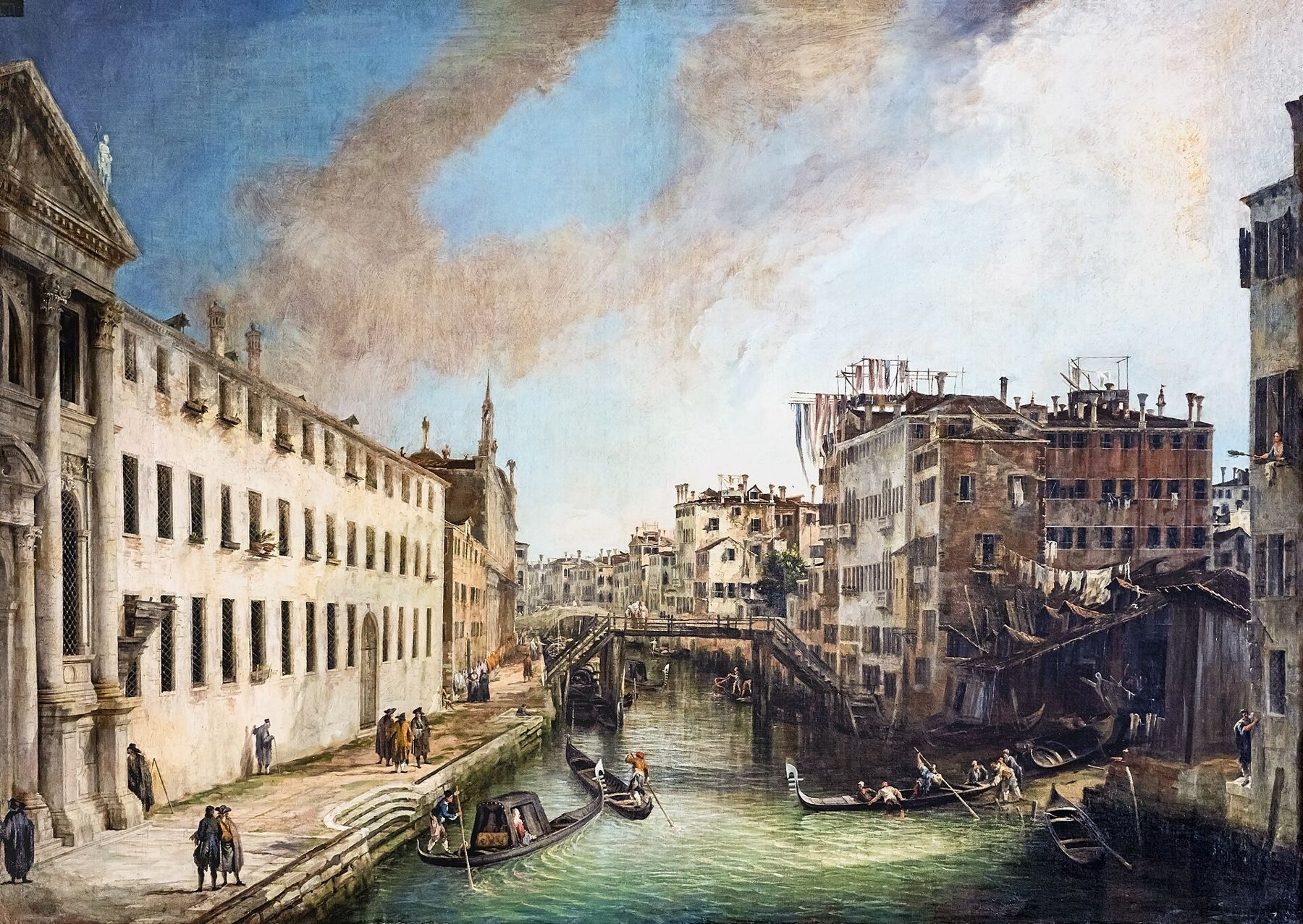
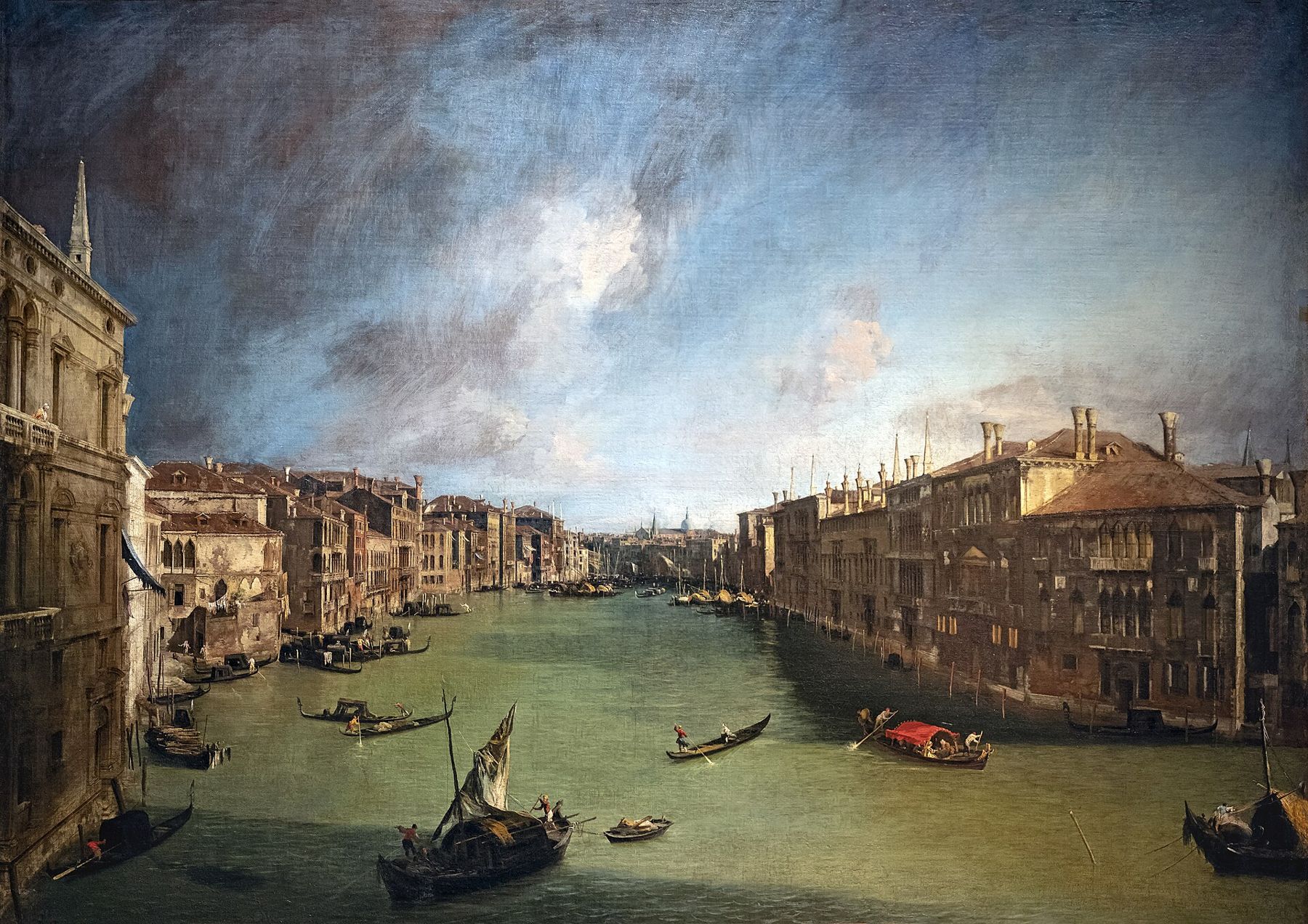
On the second floor, the picture gallery holds paintings by Venetian artists of the eighteenth century. Among the most popular are the small works of Pietro Longhi, which show scenes of everyday life among the Venetian upper classes: a lesson in dancing, a visit to the hairdresser, a family taking chocolate, a rhinoceros displayed at the Carnival. They are gentle, slightly satirical pictures, and they give a sense of what life in a palace like this was really like. Nearby hang views of Venice by painters of the same century, among them the vedute that wealthy travellers on the Grand Tour took home as souvenirs, showing the canal outside these windows much as it still looks.
The same floor also displays a series of frescoes by Giandomenico Tiepolo, the son of Giambattista, removed from the walls of the family's country villa. They include scenes of Venetian life and carnival figures, among them the white-clad Pulcinella, and they are more personal and stranger than his father's grand ceilings.
At the top of the palace, a small pharmacy from the eighteenth century has been reassembled, with its jars and wooden fittings, and windows look out over the rooftops and the canal.
The palace was meant to impress, and every surface was decorated.
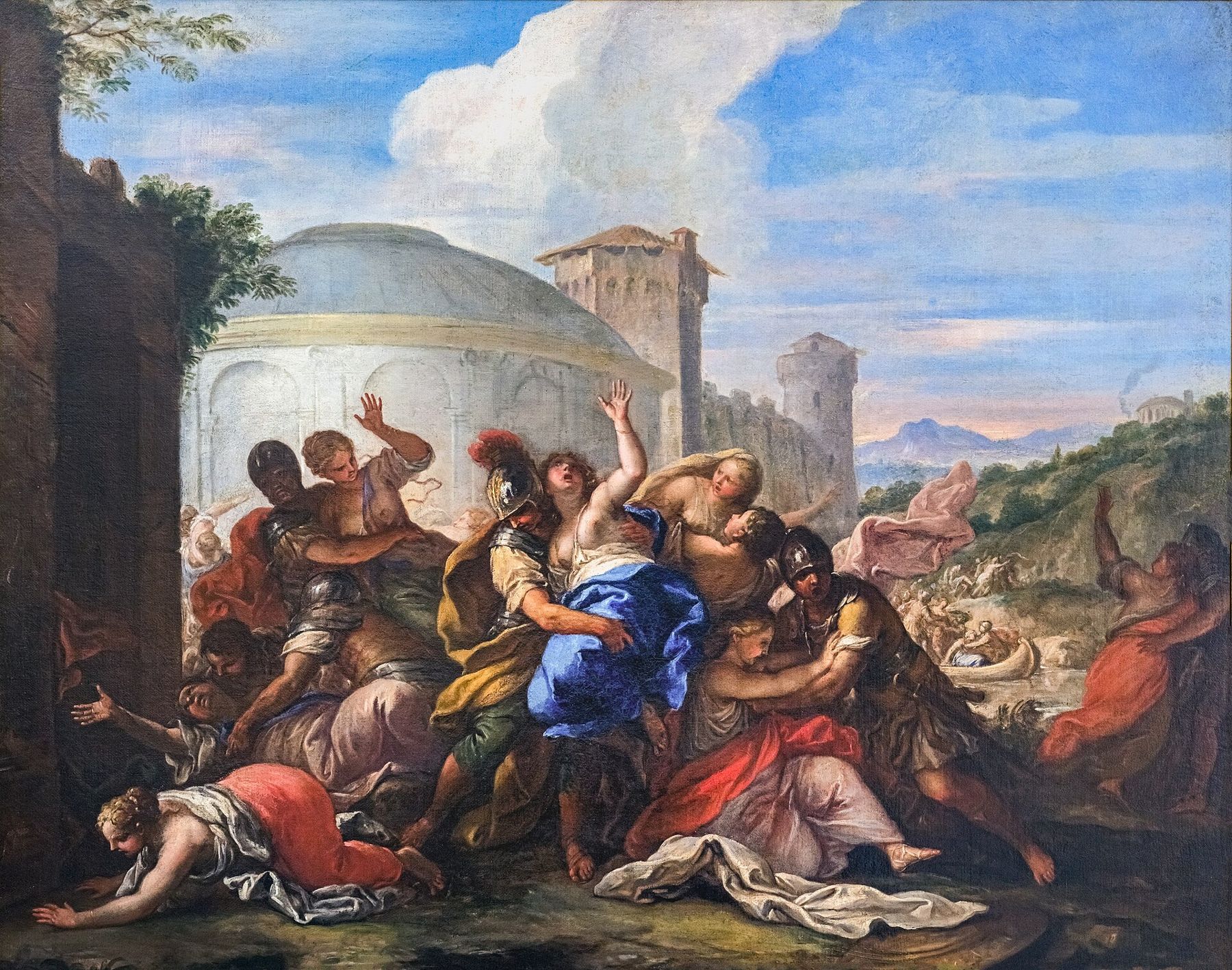
The palace's portego, the long central hall that runs from the canal front to the back of the building in every grand Venetian house, is lined with paintings and sculpture. Walk its length and look out of the windows at each end: on one side the Grand Canal, busy with boats, and on the other a quiet canal and the roofs of Dorsoduro. The contrast between the two is the essence of Venice.
A poet's last home and the visit
In the late nineteenth century, the palace was bought by the son of the English poet Robert Browning, and the poet died there in 1889 while visiting. A plaque on the facade records the fact. The city bought the palace in the 1930s and opened the museum.
Allow about ninety minutes. Combine the visit with a walk through Dorsoduro, or with the Doge's Palace across the canal. For another princely palace turned museum, see Capodimonte in Naples. Opening hours, prices and exhibitions change, so check them for Venice before you go.