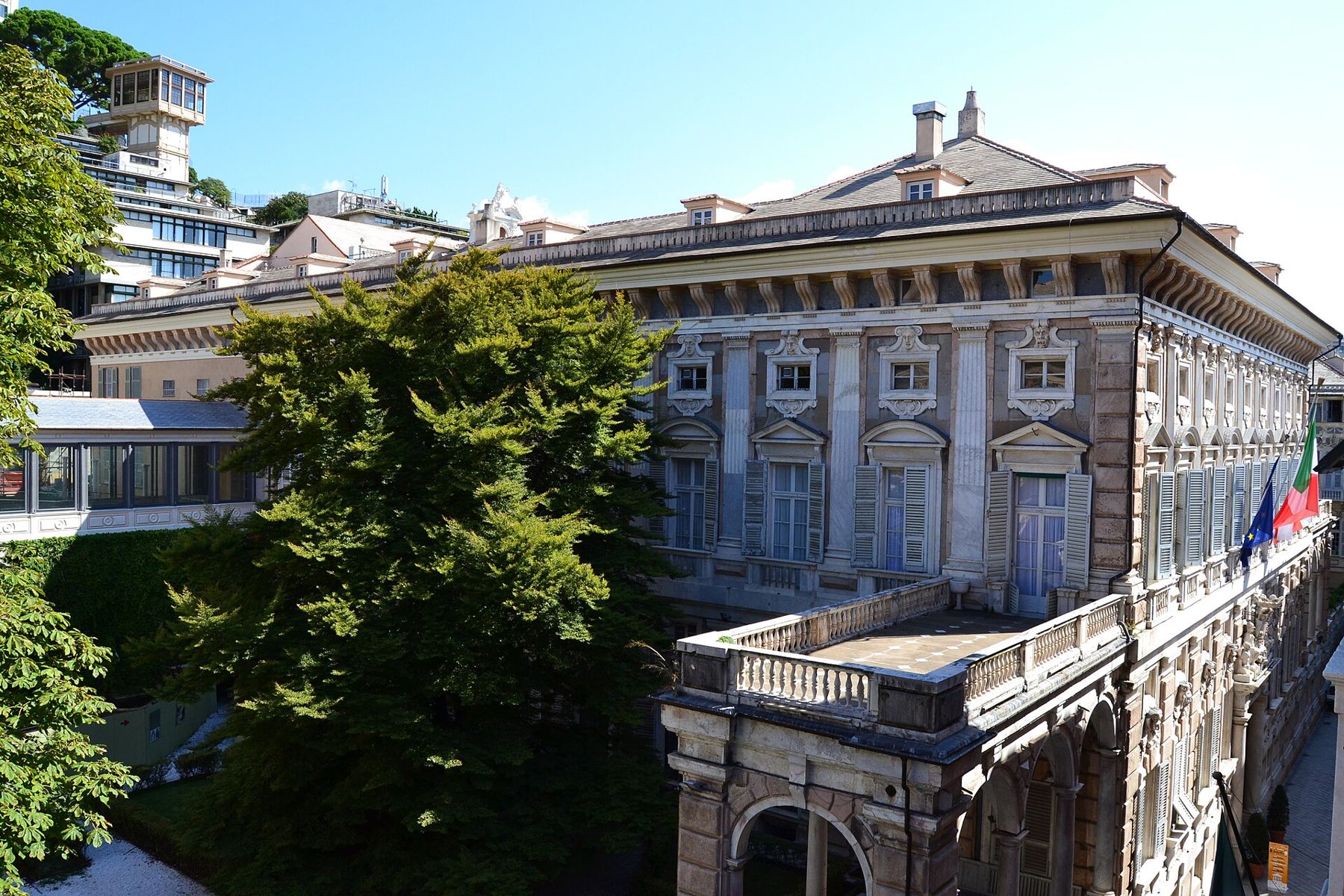
In the middle of the sixteenth century, Genoa was one of the richest cities in Europe, its bankers lending money to the kings of Spain. The city's leading families decided to build a new street on the slope above the medieval town, lined with palaces for themselves. The result, laid out in the 1550s and still called the Strada Nuova though it is now officially Via Garibaldi, is a single straight street of palaces with painted facades, grand atriums and courtyards opening onto gardens.
The Strada Nuova and the surrounding palaces were listed together as a UNESCO World Heritage Site in 2006. Three of them, Palazzo Rosso, Palazzo Bianco and Palazzo Doria-Tursi, now form the Strada Nuova Museums, numbers 03 and 04 on this list together with the city hall between them.
Before going into any of the palaces, walk the length of the street. It is short, a few hundred metres, but every building on it was designed to impress visitors to the republic. Look through the open doors into the atriums, where stairs climb to raised courtyards and gardens at the back, built into the hillside. Some of the palaces are now banks or offices, and their entrance halls can often be seen from the street.
These were also the houses of the Rolli, a system by which the republic listed the finest private palaces and assigned them, by lot, to host visiting kings, cardinals and ambassadors. On special open days held a couple of times a year, many of these private palaces open to the public.
Palazzo Bianco
Palazzo Bianco, the white palace, was built in the sixteenth century and remodelled in the eighteenth. Today it holds an important collection of paintings, with Genoese, Italian, Flemish and Spanish masters from the fifteenth to the eighteenth century. Look for the Flemish panels, which reflect the close trading ties between Genoa and the Low Countries, and for works by painters who worked in the city, including Rubens and Van Dyck, both of whom spent time painting for Genoese families.
The rooms are light and well arranged, and the visit leads naturally through the garden at the back into Palazzo Tursi next door.
Palazzo Doria-Tursi and the violin
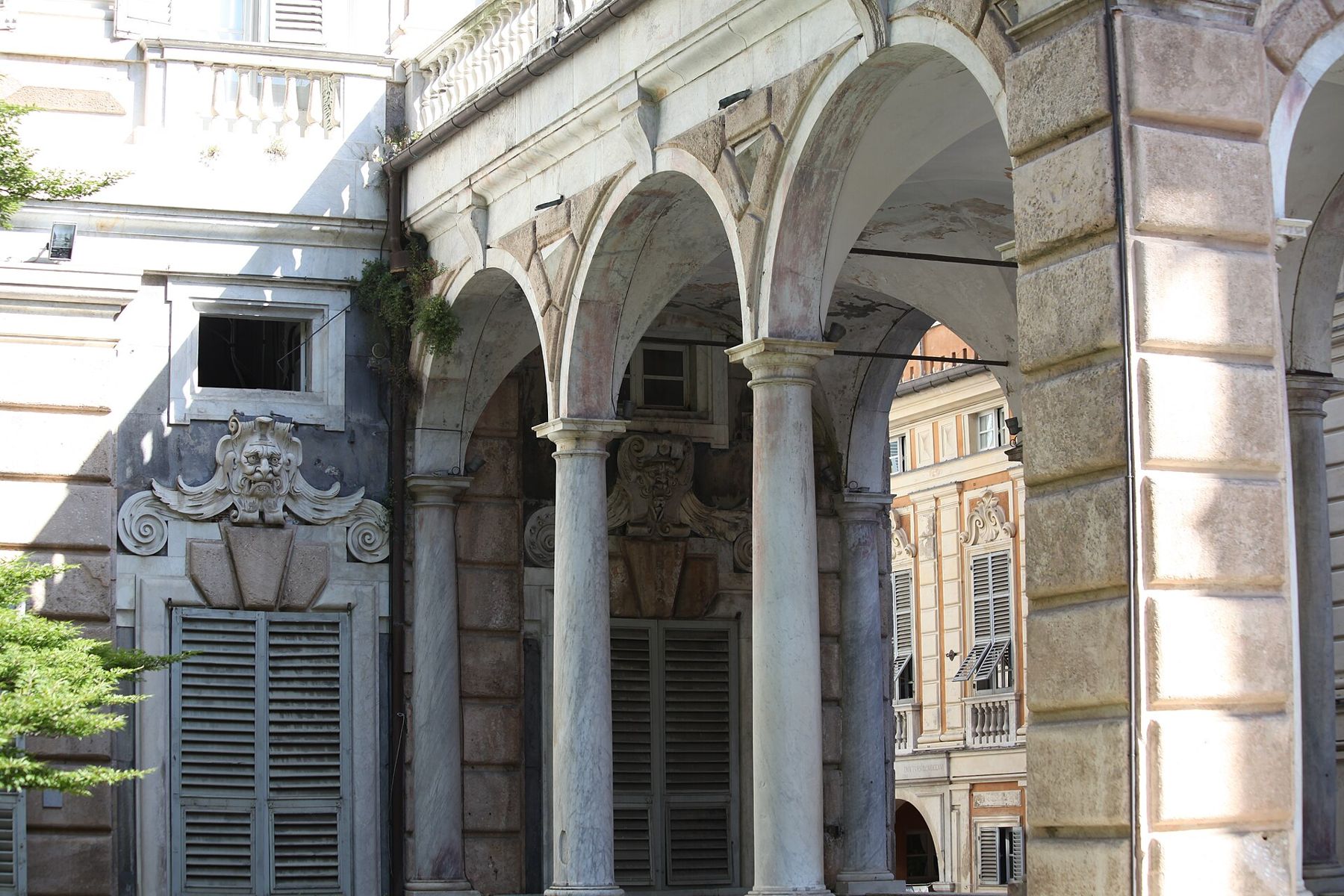
Palazzo Doria-Tursi is the largest palace on the street, built on three plots of land with a garden behind. It has been Genoa's city hall since the nineteenth century, and its council chamber is still in use. Part of it is open as a museum. Its most famous treasure is a violin made in the eighteenth century and played by Niccolò Paganini, the virtuoso born in Genoa, who left it to the city. It is displayed in a room of its own, and on special occasions it is still taken out and played.
The palace's courtyard, with a double staircase and an arcade, is one of the finest on the street.
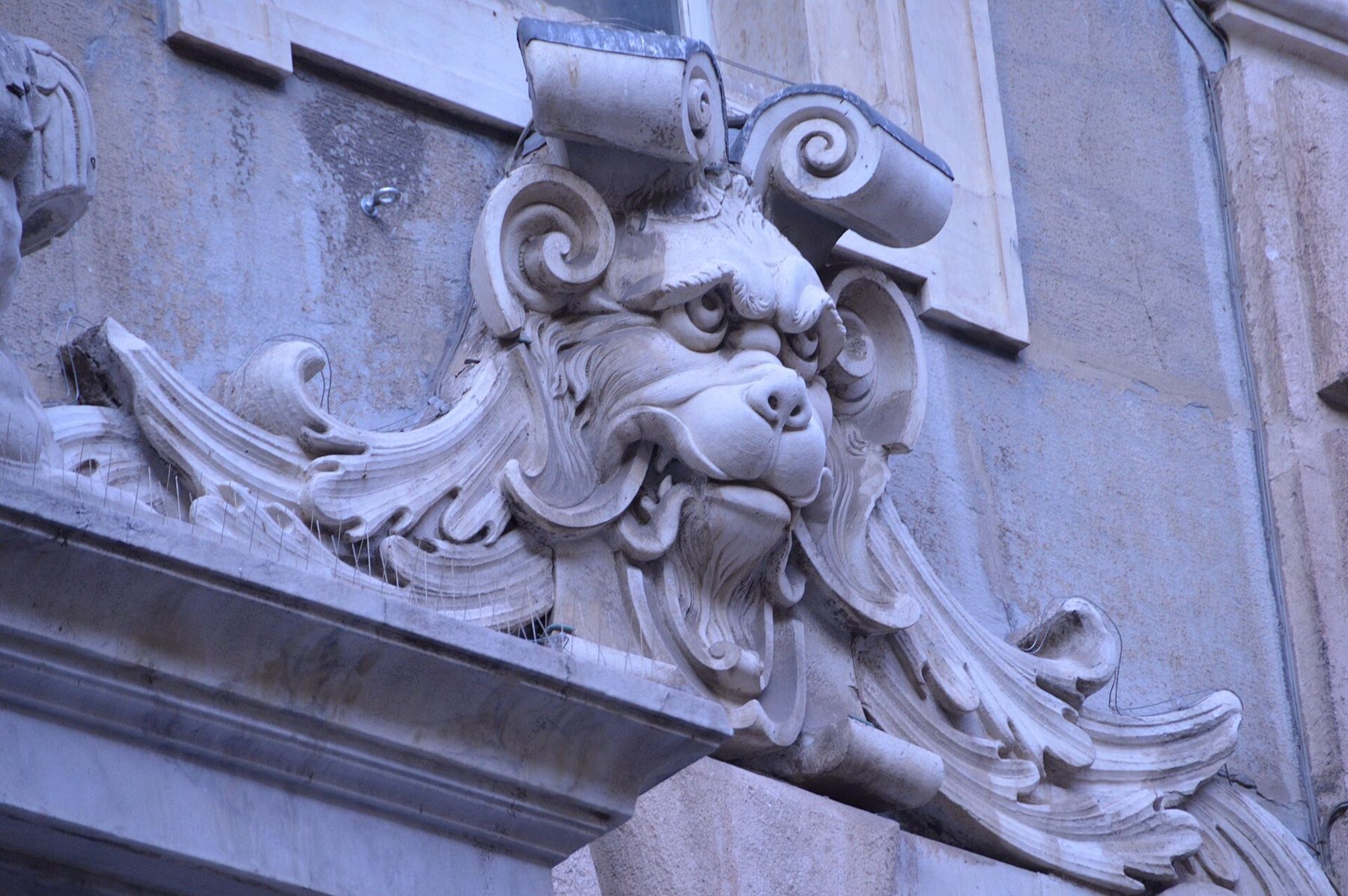
Look up in every room: the ceilings are often the finest works in them.
Palazzo Rosso
Across the street, Palazzo Rosso, the red palace, was built in the seventeenth century for the Brignole-Sale family, who left it to the city in the nineteenth century along with its contents. The main floors keep much of their decoration: painted ceilings, gilded stucco and mirrors, and furniture of the period. The family's collection of paintings hangs in the rooms, including portraits by Van Dyck of members of Genoese families.
01The palace also has several restored apartments, including rooms furnished in the style of a twentieth-century collector who lived there. The contrast with the baroque rooms below makes it one of the most varied palace interiors in Italy.
The view from the roof
The best moment of the visit comes at the end. From the top floor of Palazzo Rosso, a narrow stair climbs to a belvedere on the roof. The view takes in the whole of Genoa: the slate roofs of the old town, church domes and towers, the port, the lighthouse, and the hills and forts above the city. Access is limited and depends on staff and weather, so ask when you buy your ticket.
The painters who worked for Genoa
In the early seventeenth century, Genoa's wealth attracted some of the leading painters of Europe. Peter Paul Rubens visited and drew the palaces of the Strada Nuova, publishing a book of their plans that spread their designs across northern Europe. Anthony van Dyck spent several years in the city painting the Genoese nobility, and his portraits of men and women in black silk and lace, standing before columns and curtains, defined how the city's rulers wished to be seen. Several of those portraits hang in Palazzo Rosso and Palazzo Bianco.
Local painters flourished too, and the ceilings of the palaces were decorated by Genoese fresco painters who specialised in light, airy allegories and mythological scenes. Look up in every room: the ceilings are often the finest works in them.
Because the street was cut into a steep slope, the palaces on its uphill side were built with their gardens raised above the street level, reached through the atriums and up flights of stairs. The garden behind Palazzo Bianco and Palazzo Tursi, with its terraces and fountains, is one of the few places in central Genoa where you can sit among trees. The palaces on the downhill side have their courtyards at street level and their gardens lower down.
This clever use of the hillside, with each palace arranged as a sequence from street to atrium to courtyard to garden, was one of the features that made the Strada Nuova famous, and it is still the best way to experience the buildings: walk through them from front to back, and feel the ground rise.
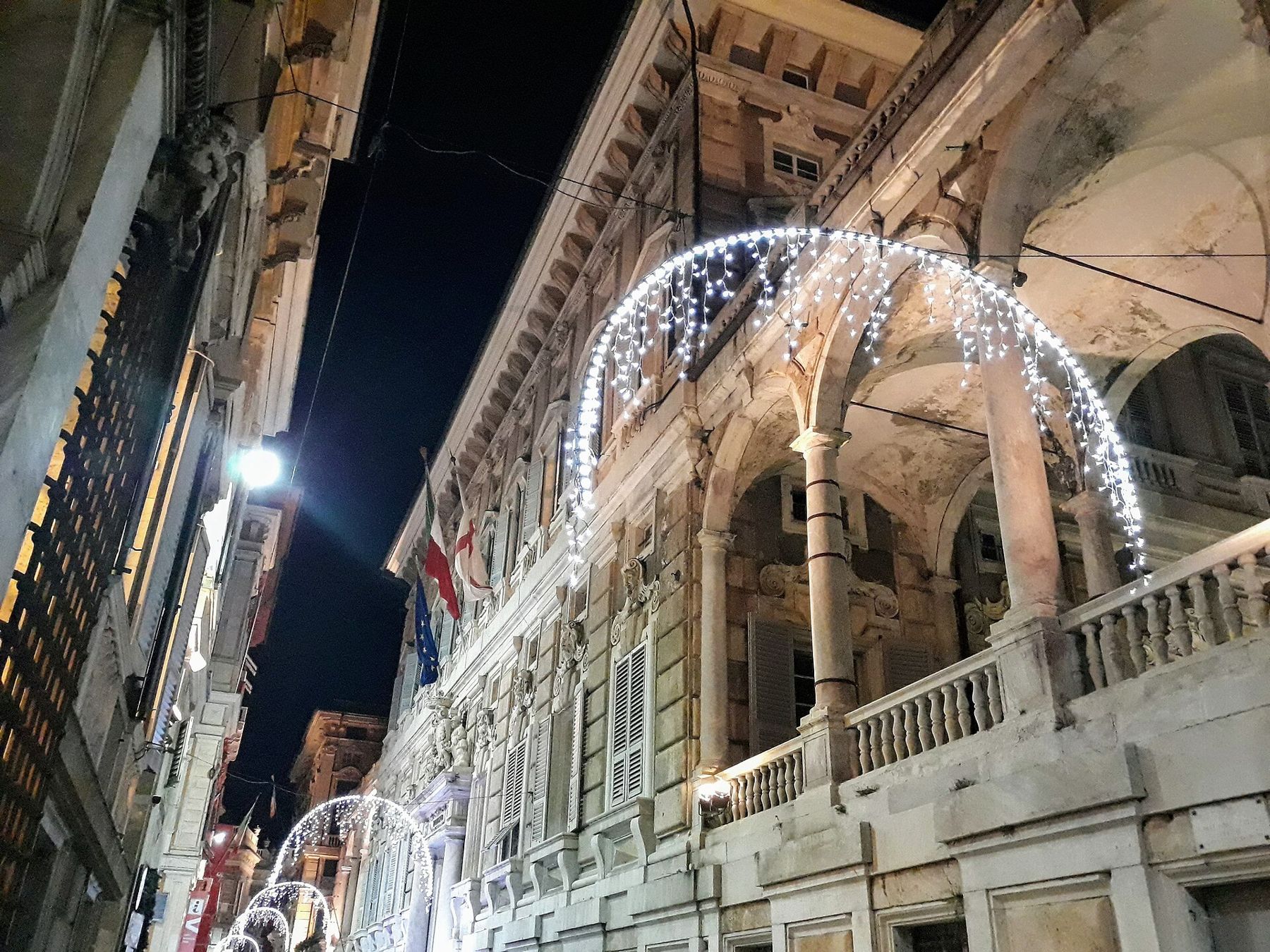
Between the palaces, the street itself is a pleasure in the evening, when the facades are lit and the shops in the side streets are open. The view down the street from either end, with the painted fronts lined up like stage sets, is one of the finest urban scenes in Italy, and it costs nothing at all to enjoy.
Hours, tickets, the right day
All three palaces are covered by one ticket, and they can be visited in any order. Allow half a day to see them properly. The street is a short walk from Palazzo Ducale and the cathedral. From Genoa, the list continues north to the Savoy palaces of Turin. Opening hours, ticket prices and access to the roof change, so check them for Genoa before you go.