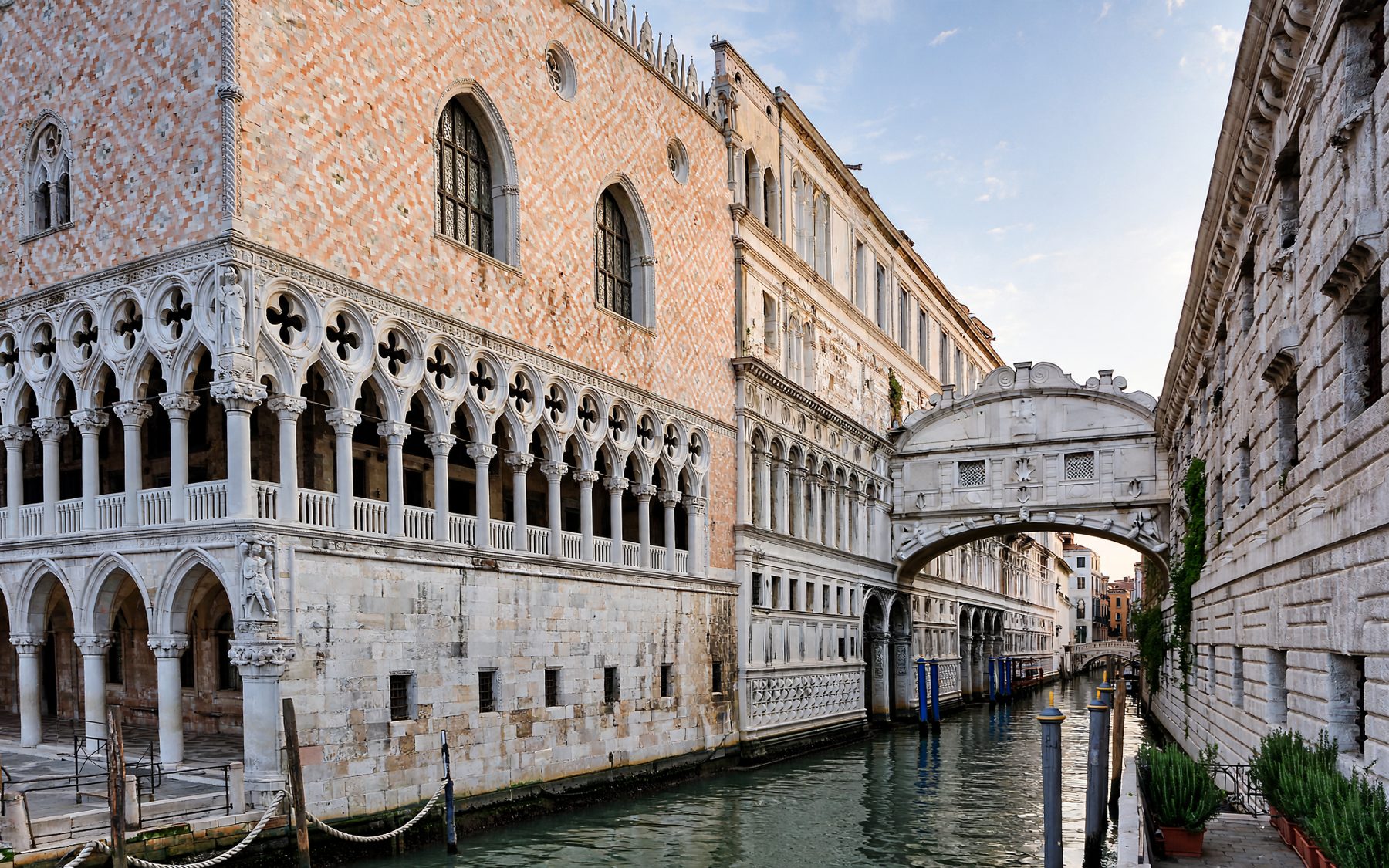
The Doge's Palace stands on the waterfront of St Mark's basin, beside the basilica of San Marco, at the place where visitors once arrived in Venice by sea. For centuries it was the seat of the government of the Venetian Republic: the residence of the doge, the meeting place of the great councils, the courts of justice and the prisons. It was also a statement of power, meant to impress every ambassador and merchant who stepped ashore.
It is number 20 on this list, and one of the most visited buildings in Italy. It rewards an early start and a slow pace. The present building was largely built and rebuilt between the fourteenth and sixteenth centuries, after fires damaged earlier versions, and its rooms hold some of the most ambitious painting cycles of the Venetian Renaissance, all of them devoted to one subject: the republic itself.
The Gothic front
The palace's two great facades, one on the water and one on the Piazzetta, are among the most famous in the world. Built mostly in the fourteenth and fifteenth centuries, they turn the usual logic of buildings upside down: a light arcade of white columns at ground level, a more delicate loggia of pointed arches above, and on top a massive wall of pink and white marble in a diamond pattern, pierced by a few large windows. The heaviest part sits on the lightest, and the effect is of a building floating above the water.
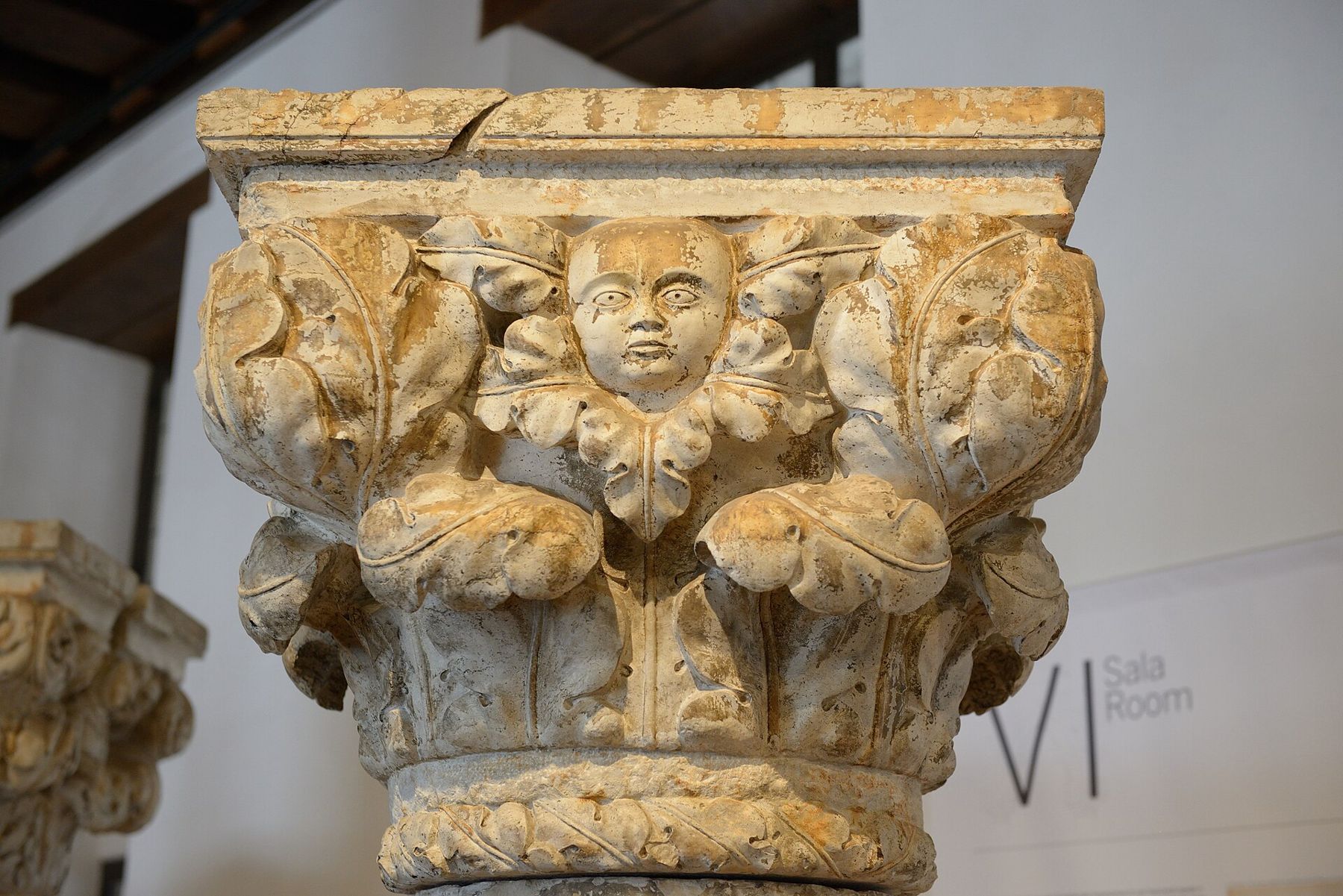
Look at the carved capitals of the ground-floor columns, each different, with figures of virtues, vices, months, crafts and animals. On the corners of the building, carved scenes from the Bible show the Judgment of Solomon, the Drunkenness of Noah and Adam and Eve.
The Porta della Carta and the courtyard
Beside the basilica, the Porta della Carta is the ceremonial gateway of the palace, a fifteenth-century Gothic doorway decorated with statues and a carving of a doge kneeling before the winged lion of St Mark. Visitors today enter by a side door on the waterfront, but the route leads into the same great courtyard.
The courtyard is enclosed by arcades and facades from different periods, and at one end rises the Giants' Staircase, a grand flight of marble steps topped by two huge statues of Mars and Neptune by Jacopo Sansovino, symbols of Venice's power on land and sea. Doges were crowned at the top of this staircase.
The Golden Staircase and the state rooms
Visitors climb to the upper floors by the Scala d'Oro, the Golden Staircase, its vault covered in white stucco and gold leaf. At the top lie the apartments of the doge and the rooms of the government councils. These rooms are decorated with vast paintings by Titian, Tintoretto, Veronese and other Venetian masters, celebrating the glory of the republic and its victories.
The rooms where the Senate, the College and the Council of Ten met are among the finest. The College was where ambassadors were received, and its ceiling, painted by Veronese, shows Venice enthroned in glory, a reminder to every foreign envoy of whom he was dealing with. The Senate chamber, where the republic's policy was debated, has a clock on the wall to time the speeches and paintings celebrating the city's devotion and power. The Council of Ten, the republic's secret security council, met in a room decorated with ceilings by Veronese. Nearby, a letterbox in the wall, carved as a lion's mouth, received anonymous denunciations.
The Hall of the Great Council
The largest room in the palace, the Hall of the Great Council, was the meeting place of the body that included all the adult male nobles of Venice, often more than a thousand men. It is one of the largest rooms in Europe. After a fire in 1577 destroyed its earlier decoration, it was redecorated with paintings by the leading artists of the day. On the wall behind the doge's throne hangs Tintoretto's huge Paradiso, one of the largest paintings on canvas in the world, crowded with hundreds of figures around Christ and the Virgin.
Around the top of the walls runs a frieze of portraits of the doges. One space is painted black, with a Latin inscription: it belongs to Marino Faliero, the doge executed in 1355 for plotting against the republic.
The rooms are large and the visit is long, so pace yourself. Benches are few, the floors are hard stone, and the route moves in one direction through the building, which makes it hard to turn back for a second look. Take a moment in each hall to look up, since much of the best painting is on the ceilings, framed in heavy carved and gilded wood. Large bags have to be left at the cloakroom near the entrance, and the rooms can be warm in summer, so dress light and carry a little water for the end of the route.
Across the Bridge of Sighs
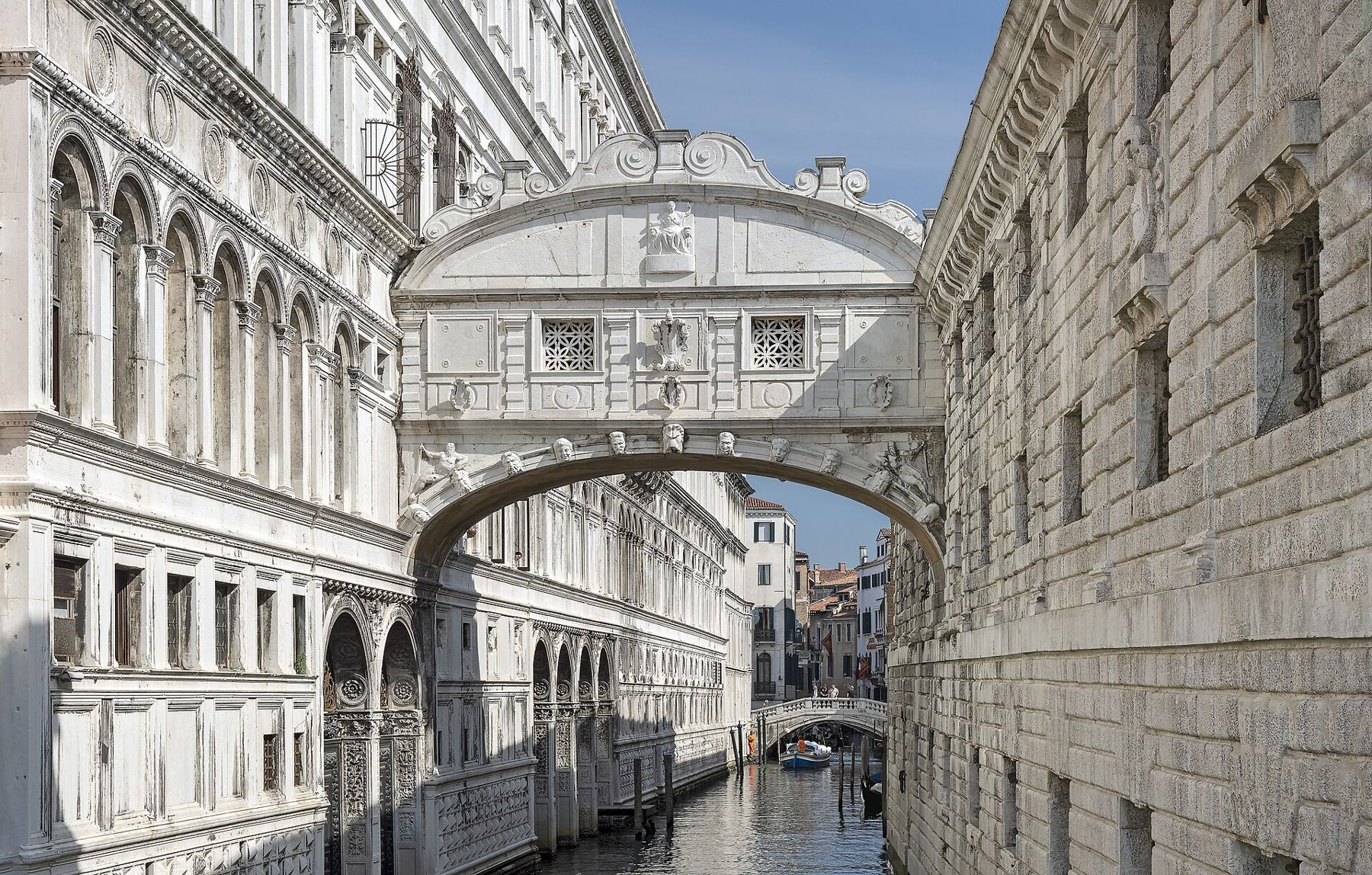
From the courts and interrogation rooms, visitors cross the Bridge of Sighs, an enclosed bridge of white stone over the canal behind the palace, to the New Prisons on the other side. The bridge got its name from a nineteenth-century legend that prisoners sighed as they caught a last glimpse of the lagoon through its small stone windows. Inside the prisons, the narrow corridors and stone cells are cold and dark, a sharp contrast to the splendour of the halls you have just left. Graffiti scratched by prisoners survive on some of the walls. The prisons remained in use long after the fall of the republic, and walking through them is a sobering end to the visit. From the windows on the bridge, the view over the lagoon towards San Giorgio Maggiore is the same one the prisoners saw.
The Secret Itineraries tour, booked separately, visits hidden parts of the palace, including the offices of the state secretaries and the cells under the roof called the Leads, from which Giacomo Casanova famously escaped in the eighteenth century.
The heaviest part sits on the lightest, and the effect is of a building floating above the water.
Beating the queue to the Piazzetta
The palace is busy all year and very crowded in summer and at holidays. Book a timed ticket in advance, arrive early, and visit in the cooler and quieter months if you can. Allow two to three hours. Combine the visit with Ca' Rezzonico across the Grand Canal for a picture of Venice in its last century. The list then leaves the lagoon for the Este palaces of Ferrara. Opening hours, prices and tour arrangements change, so check them for Venice before you go.