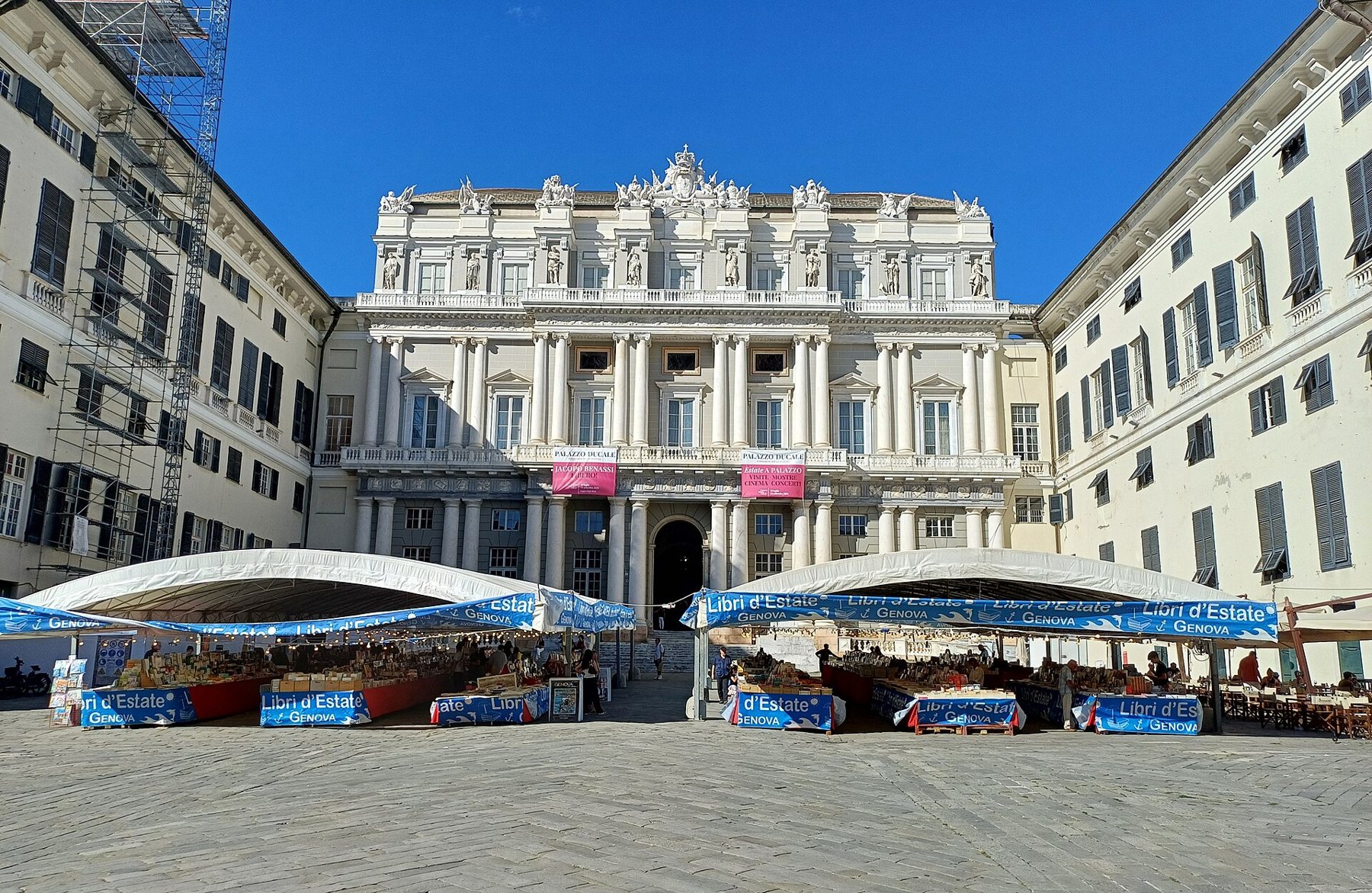
Most palaces on this list were built for a family. Palazzo Ducale was built for a republic. From the fourteenth century until the end of the eighteenth, Genoa was governed by elected doges, and this was their palace: residence, council chamber, court, treasury and prison in one great block between the cathedral and the ridge above the old port. When the republic fell in 1797, the building passed through a series of governments and uses. Since its restoration at the end of the twentieth century, it has been a public cultural centre, and its courtyards are one of the busiest passages in the city.
It is number 01 on this list, the first door you meet coming down the Ligurian coast, and it sets the tone for Genoa: grand, a little severe from outside, and full of painted ceilings once you are through the door.
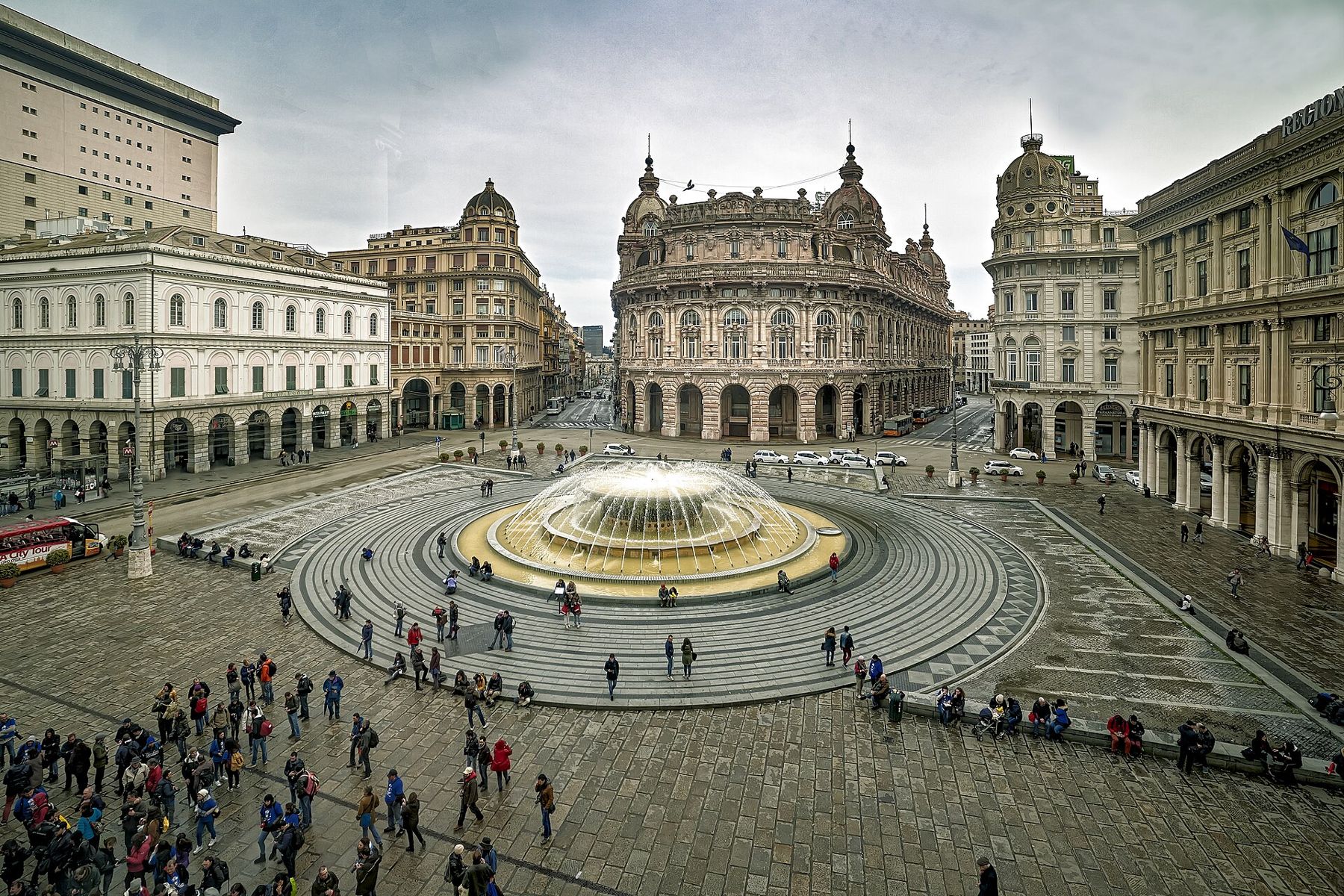
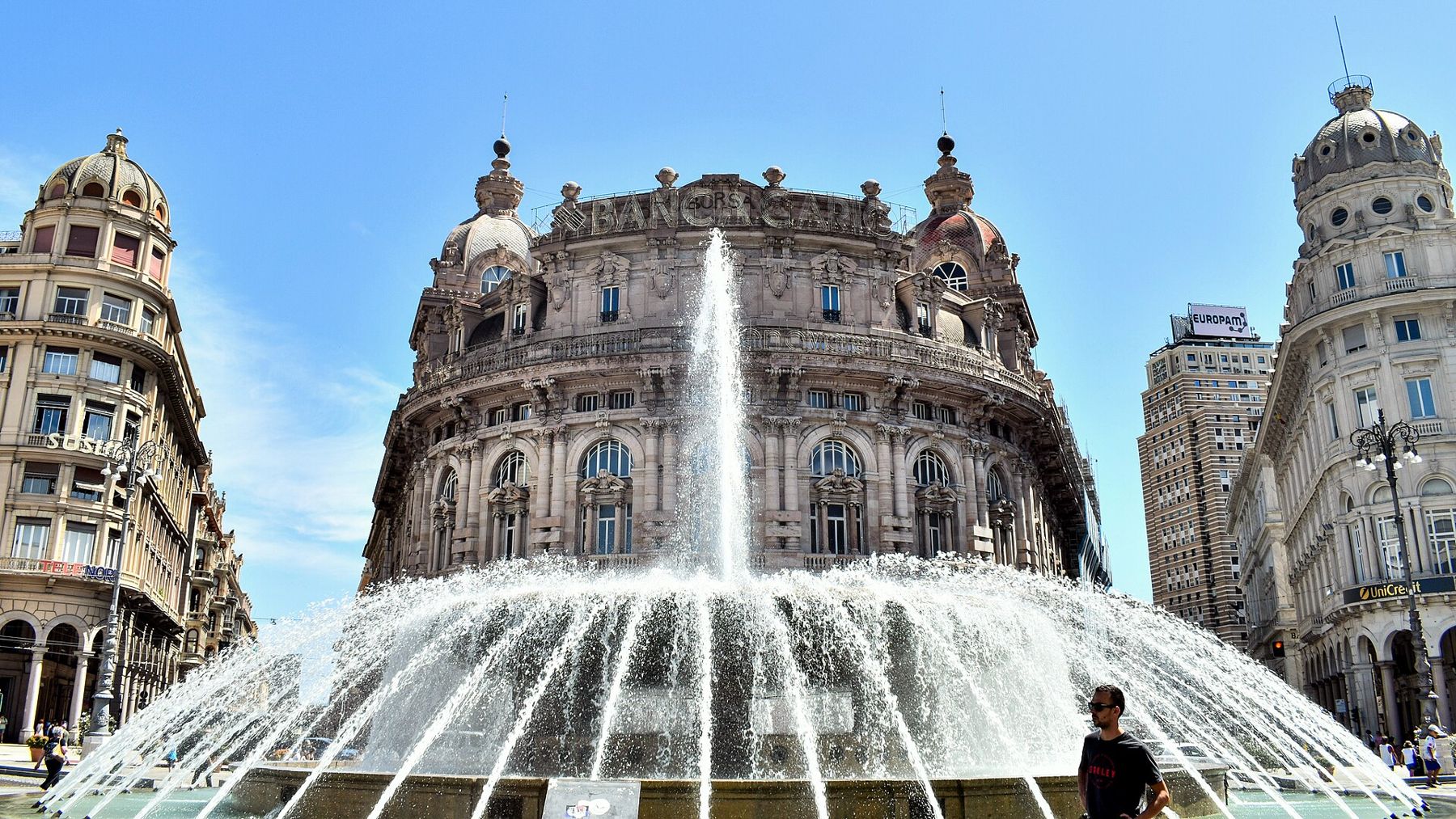
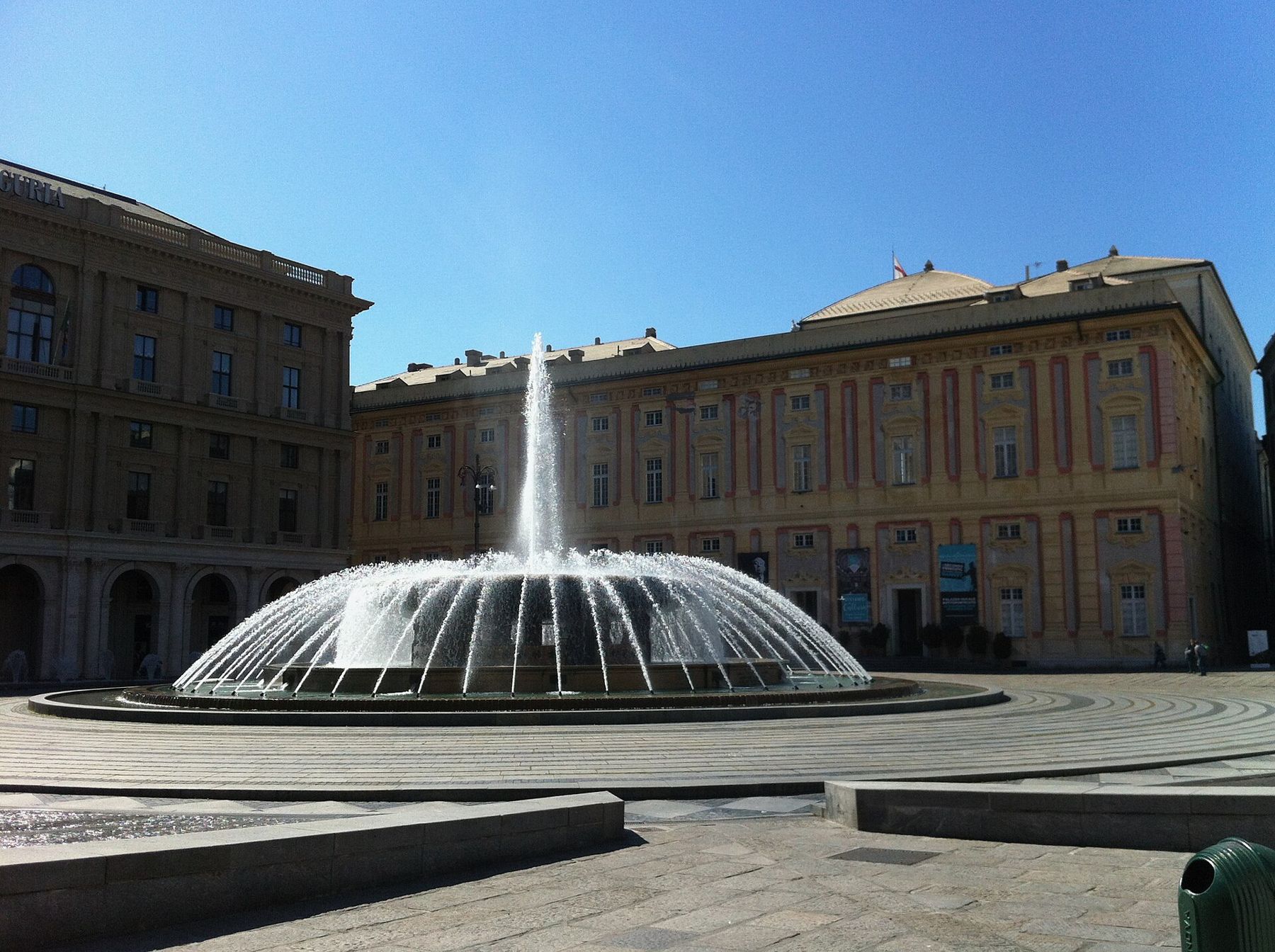
The palace has two main fronts, and they belong to different eras. On Piazza Matteotti, the older facade faces a small square beside the church of the Gesù. It was rebuilt in a sober neoclassical style after a fire in the late eighteenth century damaged the great halls. On the other side, the palace opens towards Piazza De Ferrari, the city's grand modern square with its round bronze fountain, through a later facade and arcade.
Walking in at one side and out at the other is the best introduction. Between them lie two large porticoed courtyards and a covered atrium where people cut through on their way across the city, sit on the stone benches and drift into the bookshop and cafes. You can do this without a ticket.
The council halls upstairs
The grand staircase leads to the piano nobile, the main floor, where the republic's two council chambers face each other. The Great Council Hall is the largest room in the palace, a vast space with a painted vault and tall windows, once used for the meetings of the republic's broad council and now for conferences, concerts and exhibitions. The smaller Minor Council Hall, where the inner government met, is richly decorated with gilded stucco and paintings.
Both rooms were remade after the fire, and their decoration is a mixture of eighteenth-century work and later restoration. What strikes most visitors is the scale: these were rooms built to hold a governing class, and they still feel like it.
The doge's chapel
Tucked off the main floor, the doge's private chapel is one of the most beautiful rooms in the palace. Its walls and vault are covered in frescoes painted in the seventeenth century, celebrating the history and faith of the republic, with scenes of Genoese heroes and the Virgin as protector of the city. The chapel is small, and its colours are bright after restoration. It is usually included in the palace tour or opened with the exhibitions; check whether it is accessible on the day of your visit.
Up the tower, down to the cells
The palace tower, the Torre Grimaldina, rises above the roofs on the side of the old town. Its upper rooms served for centuries as a prison for political prisoners and other detainees of the republic, and the small cells, with graffiti scratched into the walls by their inmates, can be visited on guided tours. At the top, a terrace looks out over the slate roofs of the old town, the domes and towers of the churches, the port and the hills that ring the city.
03The climb is by narrow stairs, and visits are by tour at set times, often only on certain days. It is worth planning around: no other view in central Genoa shows so clearly how the medieval city is packed between the sea and the mountains.
Exhibitions and the life of the palace
Palazzo Ducale today is above all an exhibition centre. Major shows of painting, photography and design are held in the apartments of the doges, and the palace hosts lectures, festivals and concerts through the year. The exhibition you happen to find decides much of what you will see inside, so look at the programme before you go. Some visitors come for a particular show; others simply walk through the courtyards and climb the tower.
The palace also houses cultural institutions and offices, and parts of it are not open to the public at all. Signs and staff at the entrance explain which spaces are accessible.
Most palaces on this list were built for a family. Palazzo Ducale was built for a republic.
How the doges lived and governed
The doge of Genoa was not a king. After the reforms of the sixteenth century, doges were elected for a term of two years from among the nobility, and during that term they lived in the palace almost as prisoners of their office, rarely allowed to leave without permission. Around them, councils of nobles made the real decisions, and the palace was arranged to house all of them: the doge's apartments, the council chambers, the offices of the magistrates, the archives and the prisons.
That arrangement explains the shape of the building. It is not one palace but several, joined over the centuries around the two courtyards, each wing added as the republic's government grew. Medieval walls survive inside later ones, and in places restorers have left them exposed so you can see how the building was put together.
The fire of 1777 destroyed much of the original decoration of the great halls, including paintings celebrating the republic's history. The halls were rebuilt quickly, in the style of the time, and much of what you see upstairs dates from those years of rebuilding at the very end of the republic.
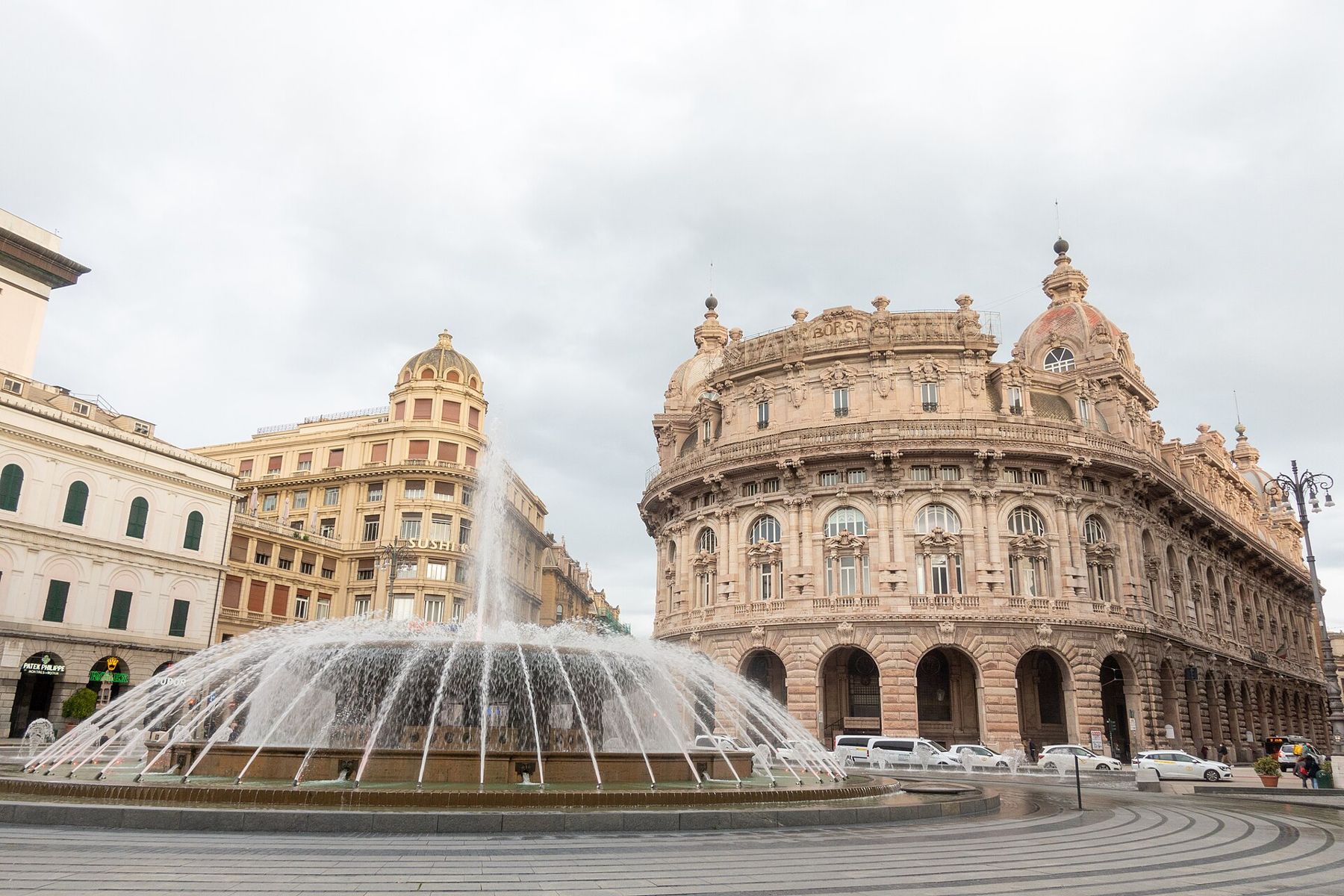
A small permanent display in the palace recalls the republic's history, and the shops and cafes under the arcades make the courtyards a natural meeting place for the city. Even if you see nothing upstairs, walking through from one square to the other at dusk, when the courtyards are lit and busy, is a good introduction to Genoa.
Around the palace
The palace sits at the top of the old town. Just below it, the cathedral of San Lorenzo, striped in black and white marble, is a short walk away. Behind it, the narrow lanes called caruggi run steeply downhill towards the port. Uphill, the elegant streets of the sixteenth century begin, with the palaces of the Strada Nuova a ten-minute walk away. From Genoa, the list runs inland and north to Turin. Opening times, ticket arrangements and tower tours change, so check them for Genoa before you go.