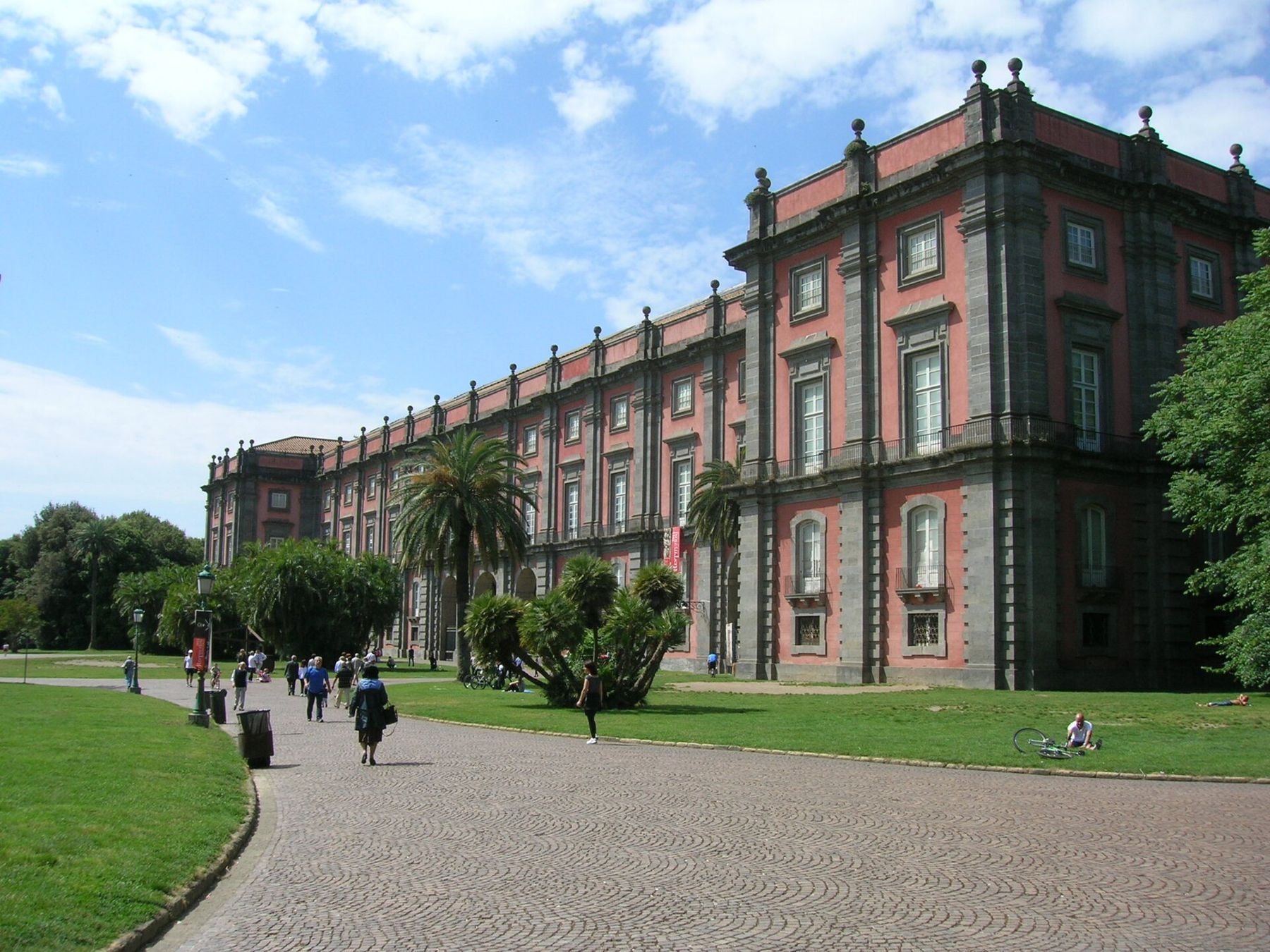
In the 1730s, Charles of Bourbon, the young king of Naples, inherited the art collection of the Farnese family from his mother, Elisabetta Farnese. It was one of the richest collections in Europe, and he needed somewhere to put it. He chose a hilltop north of the city, where the royal family already had a hunting estate, and began a great palace there in 1738. Built slowly over a century, the Reggia di Capodimonte became both a royal residence and a museum.
Today the palace houses one of Italy's most important art museums, the Museo e Real Bosco di Capodimonte, and is surrounded by its royal park. It is number 45 on this list.
The palace on the hill
Capodimonte means top of the mountain, and the palace sits high above the old city. Its long facades, in red and grey stone, are plain and severe, and the building is more like a great museum than a pleasure palace. From the terraces outside, the view looks over Naples to the bay and Vesuvius.
The museum is spread over three floors. The main floor holds the Farnese collection and the royal apartments; the upper floors hold Neapolitan painting and later art.
The Farnese collection
The Farnese paintings include works by the greatest Italian artists of the sixteenth century. Titian painted several portraits for the Farnese, including a famous portrait of Pope Paul III, who founded the family's fortunes, and a portrait of the pope with his grandsons, unfinished and full of tension. There are works by Raphael, Parmigianino, Correggio and El Greco, and a remarkable panel by Pieter Bruegel the Elder showing the parable of the blind leading the blind, with a line of men stumbling towards a ditch.
The collection also includes earlier works, such as a small, intense Crucifixion by Masaccio, one of the founders of Renaissance painting.
Caravaggio and the Neapolitan painters
On the upper floor, the museum's collection of painting from Naples is one of the finest anywhere. Its most famous work is Caravaggio's Flagellation of Christ, painted in Naples in the early seventeenth century, with Christ tied to a column in a dark room and his torturers emerging from the shadows. It had a huge influence on the painters of the city.
The rooms that follow show how Neapolitan painting developed under that influence, with works by Artemisia Gentileschi, including a dramatic Judith slaying Holofernes, Jusepe de Ribera and Luca Giordano, among many others.
The royal apartments and the porcelain parlour
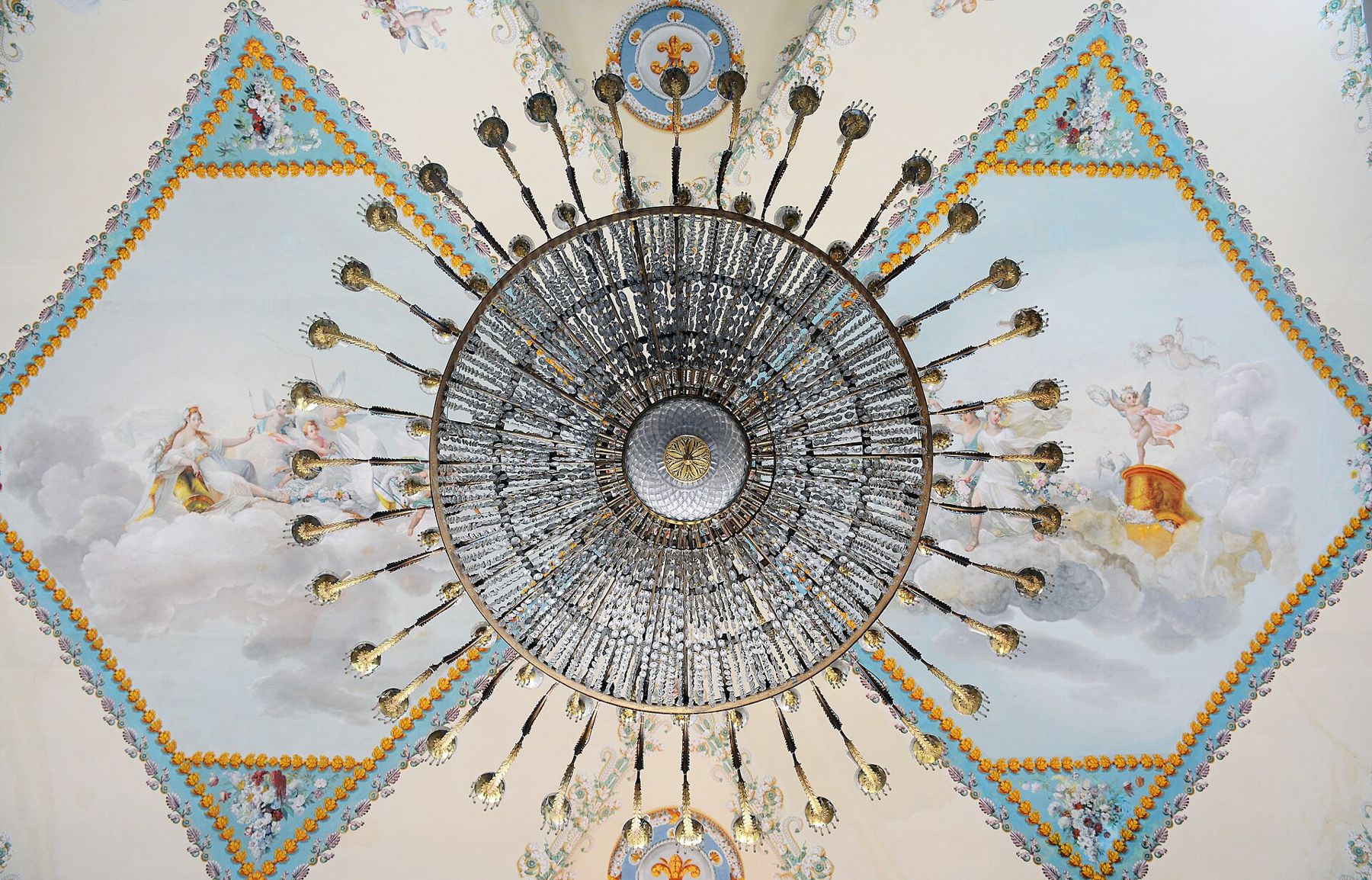
44Part of the main floor is arranged as the royal apartments, with furniture, porcelain, paintings and decorations from the Bourbon period. The most remarkable room is the porcelain parlour, a small room entirely covered in porcelain made in the Capodimonte royal factory in the eighteenth century. Its walls are decorated with white porcelain panels painted with Chinese figures, flowers, fruit and animals, and even the chandelier is porcelain. It was made for the queen's palace at Portici and moved here in the nineteenth century.
The Capodimonte porcelain factory, founded by Charles of Bourbon, was one of the first in Italy, and examples of its work fill several rooms.
The royal wood
The park around the palace, the Real Bosco, was laid out as a royal hunting estate. It covers more than a hundred hectares of woods, lawns and avenues, with fountains, statues and small buildings, including the old porcelain factory. It is a public park, and on weekends it is busy with families from the city. A walk along its shady avenues is a good break from the galleries, and the views from its edges over the city and the bay are wide.
The top floor of the museum brings the collection into the nineteenth and twentieth centuries, with paintings by artists who worked in Naples and contemporary works, including pieces made for the museum. It is a surprising contrast with the old masters below, and it shows how the museum continues to collect. The view from the upper windows over the park and the city is a welcome bonus.
The Farnese and the Bourbons
The story of the collection is a story of inheritance. The Farnese, a Roman family that rose through the papacy, assembled their collection in Rome and Parma over two centuries. When it passed to Charles of Bourbon, he brought much of it south, and the greatest ancient sculptures from it went to the archaeological museum in the city, while the paintings came to Capodimonte. The Bourbons added their own works, and the palace was a royal home and gallery until the end of their kingdom.
Hours, tickets, the right day
Capodimonte is a bus ride up the hill from the centre of Naples. Allow at least half a day: the museum is large, and it is best to choose one or two sections rather than trying to see everything. Combine the visit with a walk in the park. The palace is quieter than many Italian museums, and it rewards a slow pace. For the other Bourbon palaces, see the Royal Palace in the city and Caserta. For the Farnese theatre left behind when the collection moved, see Parma. Opening hours, prices and buses change, so check them for Naples before you go.
On weekday mornings the Farnese rooms are often almost empty.