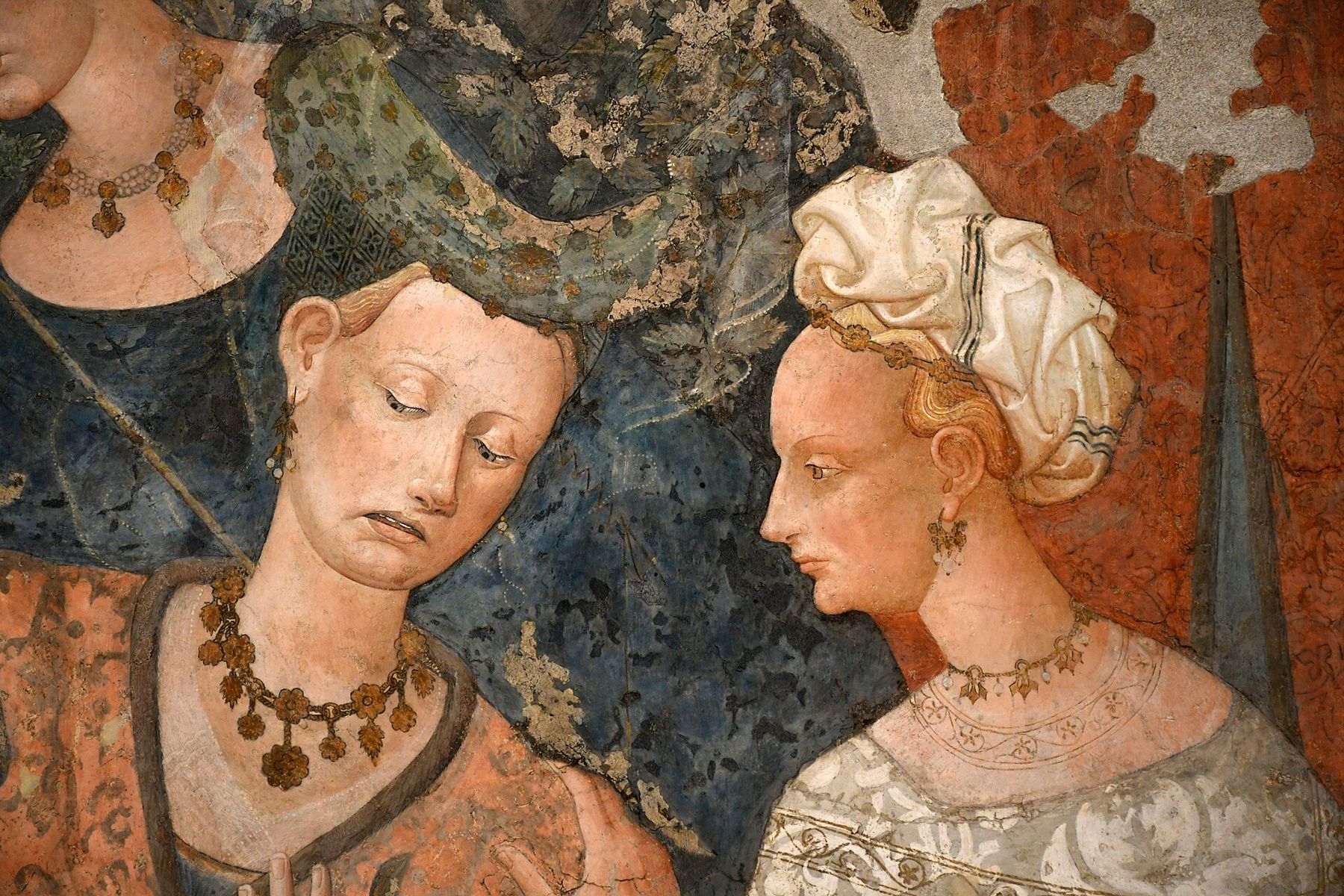
The Kalsa is one of the oldest quarters of Palermo, near the sea, where the Arab emirs once had their citadel. In the late fifteenth century, Francesco Abatellis, a Spanish official who served as harbour master of Palermo, built his palace on one of its streets. It was designed by Matteo Carnilivari in the Catalan-Gothic style, with a fortress-like facade, a carved stone doorway and a courtyard surrounded by loggias. After Abatellis died, it became a convent, and in the twentieth century it was turned into the home of the Galleria Regionale della Sicilia, the regional gallery of Sicilian art.
It is number 50 on this list, and it is one of the quieter museums in Palermo, with a few masterpieces that are among the most famous works of art on the island.
A Catalan-Gothic front
From outside, the palace looks severe: plain stone walls, two small towers and windows with delicate Gothic tracery. Its doorway is the finest part of the facade, carved in stone with twisted columns, a moulded frame and a coat of arms. Inside, the courtyard has arcades on two levels, with a Gothic loggia and a small chapel.
The palace was damaged by bombing in the Second World War. When it was restored and turned into a gallery in the early 1950s, the architect Carlo Scarpa designed the displays, with simple stands, carefully placed lighting and thoughtful use of space. His design is considered one of the masterpieces of modern museum display, and much of it survives.
The Triumph of Death
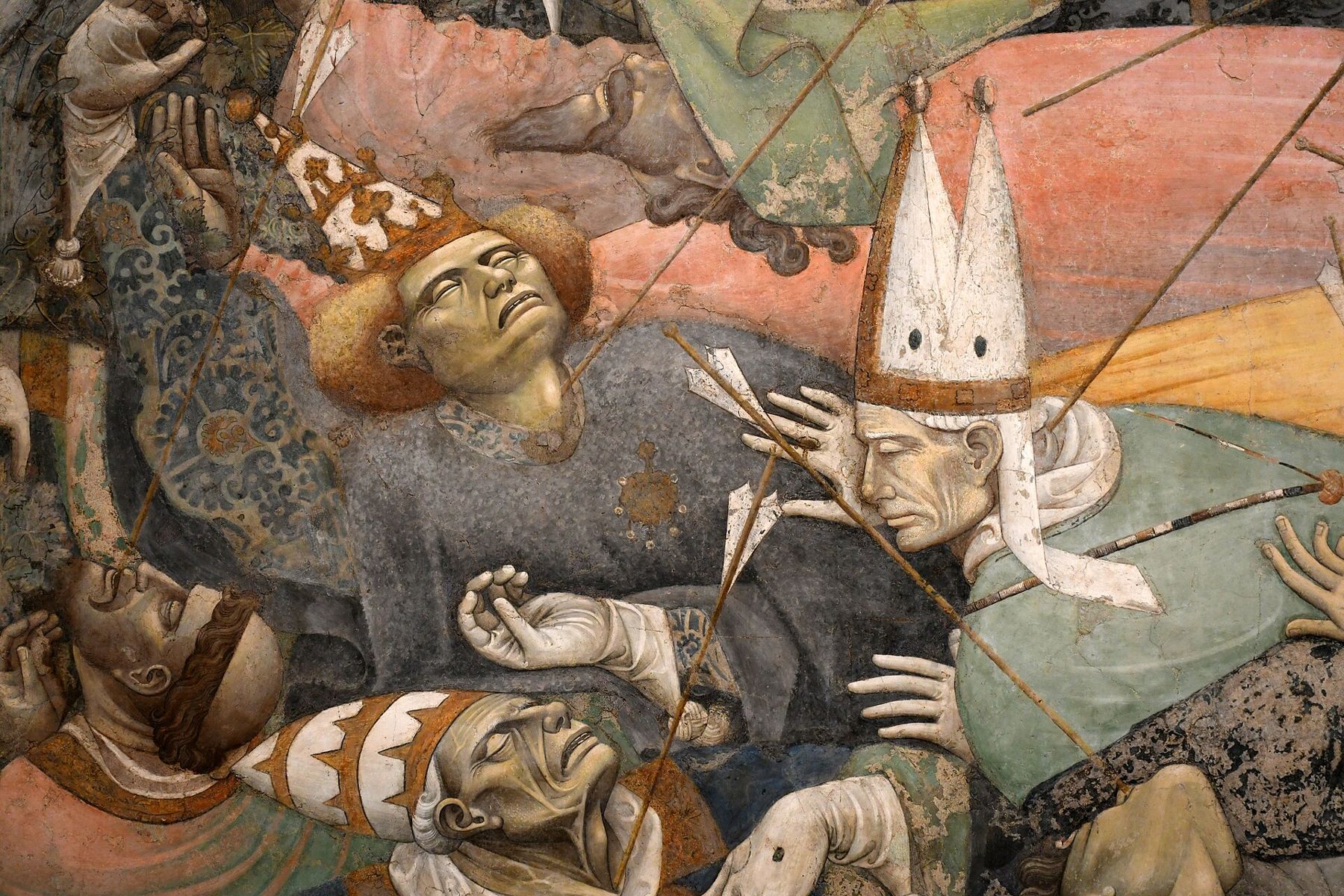
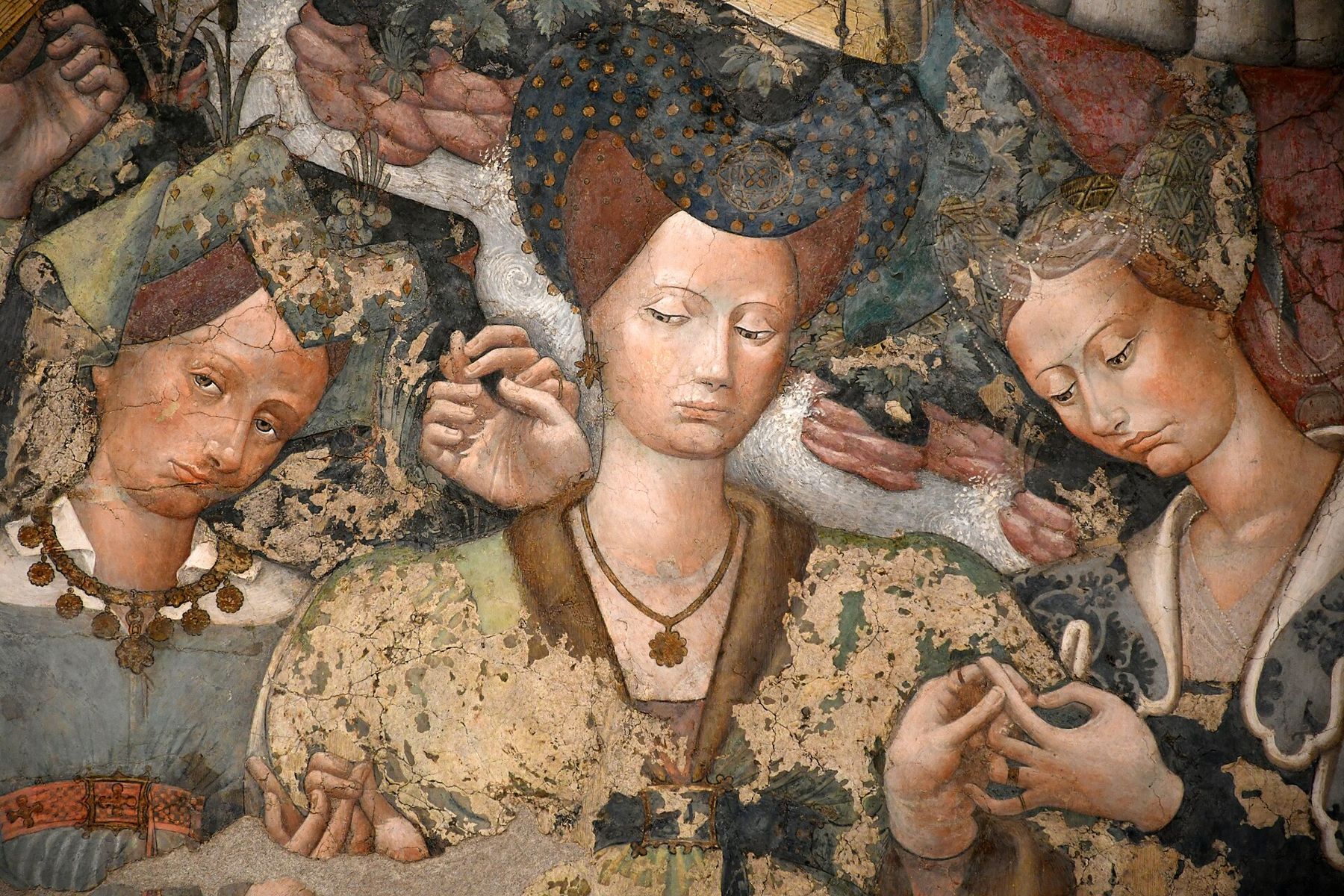
The most famous work in the gallery is the Triumph of Death, a huge fresco painted in the fifteenth century for the courtyard of a hospital in Palermo, later detached and moved here. Its painter is unknown. It shows Death as a skeleton riding a skeletal horse, shooting arrows into a group of nobles, churchmen and young people at a garden party, who fall dead around him. On the left, the poor and sick, who beg Death to take them, are ignored.
The painting is vivid, strange and full of detail: the expressions on the faces, the elegant clothes, the dogs, the fountain. It was painted at a time when plague was a constant threat, and its message, that death comes to everyone, rich and poor, is clear. It fills an entire wall of the room built for it, and visitors can stand back to see the whole or come close for the details.
The Annunciata
53The gallery's other great treasure is a small painting, the Virgin Annunciate, by Antonello da Messina, the great Sicilian painter of the fifteenth century. It shows the Virgin Mary alone, dressed in a blue veil, looking slightly to one side, with one hand raised as if to pause the moment. There is no angel in the picture; the viewer takes the angel's place. The picture is intimate, calm and mysterious, and many consider it one of the most beautiful paintings of the Italian Renaissance.
It hangs in a room of its own, and it is small enough that you need to stand close to see it properly.
Sculpture and the rest of the gallery
The gallery also holds Sicilian sculpture, including a marble bust of Eleonora of Aragon by Francesco Laurana, a calm, idealised portrait of a young woman that is one of the finest Renaissance portrait busts. Other rooms display medieval and Renaissance paintings, wooden crucifixes, majolica and decorative arts, many of them from churches and convents across the island. A Flemish triptych of the early sixteenth century, brought to Sicily by merchants, is a reminder of how closely the island's trade linked it with northern Europe, and the painted wooden ceilings and crosses of the Middle Ages show the local traditions those imports met.
The collection gives a sense of the art of Sicily from the Middle Ages to the seventeenth century, an island culture shaped by influences from Spain, Flanders and mainland Italy.
The Kalsa around it
The streets around the palace are some of the most interesting in Palermo, with churches, palaces and squares in various states of restoration. Nearby are the church of Santa Maria dello Spasimo, a roofless Gothic church used for concerts, and the Palazzo Chiaramonte-Steri, a fourteenth-century palace that later served as the seat of the Inquisition, with graffiti left by prisoners on its walls. The seafront promenade is a short walk away. The Kalsa was badly damaged in the war and neglected for decades afterwards; in recent years many of its buildings have been restored, and its squares have filled with cafes and life again, though some streets still show the scars.
Hours, tickets, the right day
Allow about an hour, more if you linger with the Annunciata, which many visitors find hard to leave. The gallery is usually quieter than the big monuments of the city, and mornings are especially calm. Combine the visit with Palazzo dei Normanni, number 53, on the other side of the old city, and with the markets in between. For another collection of paintings in a palace, see the Strada Nuova in Genoa. Opening hours and prices change, so check them for Palermo before you go.
The gallery's courtyard, with its loggias and plants, is a calm place to sit afterwards.